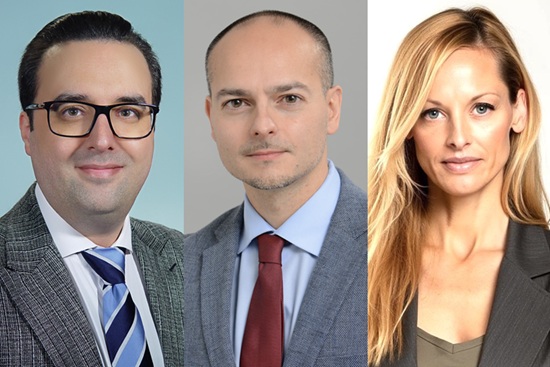
As brain-computer interfaces (BCIs) and other artificial intelligence (AI)-enabled neural devices become increasingly commonplace, Amin Tavallaii (Mashhad, Iran), Antonio Di Ieva (Sydney, Australia) and Aimee DeGaetano (Buffalo, USA) provide a snapshot of the ethical dilemmas these implants create for neurosurgical practitioners.
A patient walks into the clinic. Eighteen months ago, before the implant, they could not. Their surgery went well; bilateral leads in the subthalamic nuclei. The algorithm reading their brain right now listens to local field potentials, reads the beta-band signature that tracks their motor state, and acts. It has been updated twice since their operation. The version running today is not the version named on the consent form they signed almost two years ago—before device placement.
The patient is doing well. Their tremor is gone, their gait is improved, and their partner says they are more like themself than they have been in a decade. On the way out, the patient asks what happens to all of this if the company is sold. You do not have an answer. We are operating on patients affected by diseases we do not fully understand, with devices running algorithms that will not stand still. None of that is new in medicine. What is new is that the algorithm is now part of the implant.
For most of the history of neurosurgery, the device we put in was the device we put in. A shunt, a clip, a stimulator with fixed parameters; once the operation was done, the system was stable, and what changed afterwards was the patient—or the disease—but not the hardware. Adaptive and AI-enabled neural devices break that assumption. The system continues to make decisions long after we have closed. It updates. It learns. It is configured by people we have never met, on data we will never see, against benchmarks we are rarely shown.
This is not a reason to refuse the technology. The clinical case for adaptive deep brain stimulation (DBS), responsive neurostimulation, and emerging BCIs, is strong and growing. It is a reason to operate on these patients with a different kind of forethought than the field has yet built into training, consent, or follow-up.
The Declaration of Sydney, ratified at the first World Conference of Computational Neurosurgery (WCCNS; 13–15 February 2026, Sydney, Australia), sets out an ethical framework for that forethought. Two of its articles speak directly to BCIs—article 14 concerns their governance, while article 15 centres on the line between therapy and enhancement. Here are five questions that this framework asks us to answer in our own voice before we next pick up the drill.
- Who designed the algorithm running on this device, and who can change it?
The hardware is one decision. The decoder, the closed-loop controller, the model that decides when and how to stimulate, is another, and it is rarely scrutinised with the same rigour. Was it validated on a population that resembles your patient? Has it been independently audited, or only by the manufacturer? Will it update after implantation and, if so, who decides what triggers an update and what it does? Most consent forms do not distinguish between the device and the algorithm running on it, but they should. The patient is consenting to both despite the fact they are distinct.
- What did my patient actually consent to?
Surgical consent is point-in-time: this device, this indication, these risks. Adaptive systems do not respect that frame. The patient consents to surgery; the algorithm then makes thousands of decisions about how to modulate their basal ganglia, cortex, or seizure focus. None of those decisions were on the form. There is also a quieter question we rarely raise: the neural data the manufacturer retains may be re-analysed years later by models more powerful than anything available today. What can be inferred from a brain signal in 2030 is not what could be inferred when the patient signed. Consent at induction cannot reach forward to inferences that do not yet exist.
“An [adaptive or AI-enabled neural device] continues to make decisions long after we have closed. It updates. It learns. It is configured by people we have never met, on data we will never see, against benchmarks we are rarely shown”
- What happens to this patient when the trial ends, the company pivots, or the manufacturer is acquired?
Argus II (Second Sight) retinal-implant recipients lost support after the programme ended. Nuvectra’s 2019 collapse left spinal cord stimulator patients in a similar position. The pattern is not exotic—it is what venture-funded neurotechnology looks like when the funding logic and the patient’s lifespan diverge. Recommending a patient for implantation commits them to a relationship that may outlast the trial or the company. Whose name is on the maintenance contract in 2035 is not a question we have generally asked, but it is one we should be asking before the patient signs.
- Where is the therapy-enhancement line in this case, and who is drawing it?
The framework treats enhancement as a category demanding caution. In practice, the line between restoring function and exceeding it is drawn, case by case, by us in the clinic—often without acknowledging that we are doing so. A device tuned to bring a patient’s motor control to a population baseline and one tuned to push past it are not separated by anything in current regulation. Only by a parameter and a conversation. As the technology matures, more patients will sit in the ambiguous middle: not enhancement in the science-fiction sense, but no longer plain restoration either. The decision about where on that spectrum to operate is, increasingly, a clinical one, and we should be making it deliberately.
- Can I justify this implant if the algorithm fails silently tomorrow?
The most dangerous failure mode in computational neurosurgery is not a system that crashes. It is one that quietly degrades; a decoder whose accuracy drifts, a stimulation parameter that desyncs from the patient’s clinical state, a model whose confidence remains high while its outputs become unreliable, or a signal whose quality degrades over time. If the device stopped working in an obvious way, the patient would tell you. If it works but worsens, neither of you may notice for months. Before implantation, it’s time to ask: what monitoring is in place to catch that, who is responsible, and what is the plan if it happens? If you cannot answer those three questions, the patient is bearing a risk you have not yet identified.
These questions do not have settled answers yet—and that is the point. The Declaration of Sydney sets the framework within which the answers can be worked out, patient by patient, and institution by institution, but the work itself sits with us.
The patient who walked into your clinic will be back in three months. By then, they will know whether the company has been acquired, whether their next firmware update changes anything they can feel, and whether the algorithm running in their head this winter is the same one that was running in spring. They will ask you again what happens to all of this if the company is sold. You will need a better answer than the one you have today. Building it is work for the field, and the field has not yet done it. The questions above are where that work begins.
The Declaration of Sydney is a living document, open for endorsement by clinicians, researchers, industry partners and patient advocates at declarationofsydney.ai. We invite colleagues to read it, challenge it, and sign it if they consider it sound.
Amin Tavallaii is an assistant professor of paediatric neurosurgery at Mashhad University of Medical Sciences (Mashhad, Iran) and a computational neurosurgery fellow at Macquarie University (Sydney, Australia).
Antonio Di Ieva is a professor of neurosurgery and associate professor of neuroanatomy, and head of the Computational Neurosurgery Lab, at Macquarie University (Sydney, Australia).
Aimee DeGaetano attended Eastern Virginia Medical School at Old Dominion University (Norfolk, USA), and is chief of emerging technology and clinical research at the Ambulatory NeuroSurgery Center (Buffalo, USA).
Amin Tavallaii declared no relevant conflicts of interest. Antonio Di Ieva declared no relevant conflicts of interest. Aimee DeGaetano disclosed the following interests: consulting fees from GLG Consulting, Conan Medtech (chief medical officer), Conan Therapeutics (chief medical officer), Microvention (now Terumo Neuro), Medtronic Mosaic, Stryker Emerging Tech, Guidepoint Global, Scientia Vascular, NeuroSonic, Longeviti Neuro Solutions, Atlas Surgery Center; payment or honoraria for lectures, presentations, speakers bureaus, manuscript writing or educational events from Longeviti Neuro Solutions, Microvention (now Terumo Neuro); advisory board at NeXtGen Biologics, NeuroSonic, AI Hexeract, FIND Neuro, Longeviti Neuro Solutions, Zeta Surgical, Pathkeeper, Centile Bio, Synaptive; stock or stock options (shareholder or ownership interest) at NeXtGen Biologics, Longeviti Neuro Solutions, Zeta Surgical, Borealis and Sol, Dendrite, Varia Ventures, Alts Ventures; grants for MISSY Project Foundation.