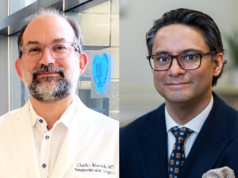
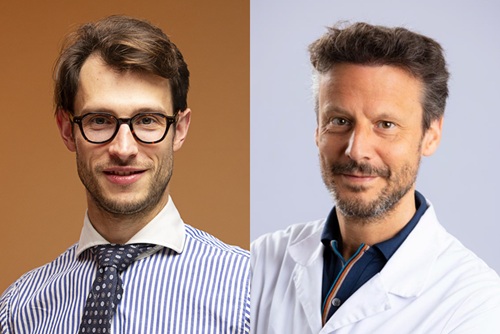
As part of a PhD programme supervised by Boris Lubicz, Adrien Guenego (both Brussels, Belgium) recently conducted the first prospective randomised trial directly evaluating the added benefit of mechanical angioplasty to intra-arterial chemical treatment for refractory cerebral vasospasm after aneurysmal subarachnoid haemorrhage (aSAH). Here, the two authors discuss what these results—published in the American Journal of Neuroradiology—mean for clinical practice, and why larger trials are now essential.
Refractory cerebral vasospasm remains one of the most feared complications of aSAH, driving delayed cerebral ischaemia and contributing significantly to poor outcomes. Intra-arterial chemical angioplasty—typically nimodipine—has long been the default endovascular treatment, yet recurrence is common, and the added value of mechanical angioplasty has remained a matter of practice variability rather than evidence.
Our pilot randomised controlled trial set out to address this gap directly. We randomised 44 internal carotid artery (ICA) procedures in 12 patients with refractory vasospasm to either intra-arterial nimodipine alone or nimodipine combined with mechanical angioplasty. Randomisation occurred at the level of the ICA rather than the patient—a pragmatic and, we believe, ethically necessary choice given that vasospasm is frequently focal, asymmetric, and recurrent within the same individual.
The results were striking. Brain perfusion, measured by percentage change in ‘time to drain’ on computed tomography (CT) perfusion, improved by 42% in the mechanical angioplasty group versus 14% with chemical treatment alone (p=0.006). Vessel diameter increased by 91% versus 30%, respectively (p<0.001). Retreatment was required in only 33% of mechanically treated vessels compared with 96% of those receiving chemical angioplasty alone (p<0.001). Complications occurred in 4.5% of procedures, with no disabling sequelae.
The choice of perfusion as the primary endpoint was deliberate, and we believe it is the right one. Much like in acute ischaemic stroke—where the goal of thrombectomy is not merely to reopen an artery but to salvage hypoperfused tissue before it progresses to infarction—the purpose of vasospasm treatment is not arterial dilation for its own sake, but the restoration of adequate cerebral blood flow to at-risk brain. CT perfusion allows us to quantify this directly, at the segment level, before and after treatment. In a population where most patients are intubated and clinical endpoints are unreliable, it provides the most meaningful and reproducible surrogate for what we are actually trying to achieve: preventing ischaemic injury.
Viewed through this lens, a 42% improvement in time to drain is not a technical curiosity—it reflects meaningful tissue rescue in patients who cannot tell us whether they are getting better.
These findings should encourage a shift away from chemical angioplasty as a default monotherapy in significant arterial narrowing. Mechanical angioplasty produces a more durable result, reducing repeated procedures and their cumulative risk. That said, this remains a pilot study. Larger, multicentre trials with patient-level randomisation and clinical endpoints—including modified Rankin scale (mRS) and infarct burden—are now essential.
We believe this trial represents a meaningful first step toward an evidence-based treatment algorithm for refractory cerebral vasospasm, and we hope it catalyses the larger trials this field urgently needs.
Adrien Guenego is an interventional and diagnostic neuroradiologist at Erasme University Hospital/Université Libre de Bruxelles in Brussels, Belgium.
Boris Lubicz is head of the Department of Interventional Neuroradiology at Erasme University Hospital/Université Libre de Bruxelles in Brussels, Belgium.
The authors declared no relevant disclosures.