Ahead of neuroRAD 2026 (7–9 October, Mainz, Germany)—the 61st annual meeting of the German Society of Neuroradiology (DGNR), held jointly with the 8th German Stroke School—congress president Daniel Kaiser (Dresden, Germany) outlines how this year’s meeting will bring together the pioneers of neuroradiology as well as the generation that will shape its future.
‘Next generation—the future is now’ is the motto of neuroRAD 2026. For us, however, this is more than the title of a congress; it reflects a transition that is already taking place across our specialty.
For the first time in the history of the DGNR, the congress presidency has been entrusted to Young Neuroradiology (JUNRAD), the society’s junior section. Together with my fellow congress presidents Katharina Wenger-Alakmeh (Frankfurt, Germany) and Roland Schwab (Karlsruhe, Germany), I therefore have the privilege and responsibility of shaping neuroRAD 2026 from the perspective of a new generation.
But a next-generation meeting should not be a meeting only for the next generation. Quite the opposite: progress in neuroradiology has always depended on the exchange of experience, ideas and perspectives. Our aim in Mainz is therefore to bring together those who helped build, establish and advance modern neuroradiology with those who will determine where it goes next.
Standing on the shoulders of giants
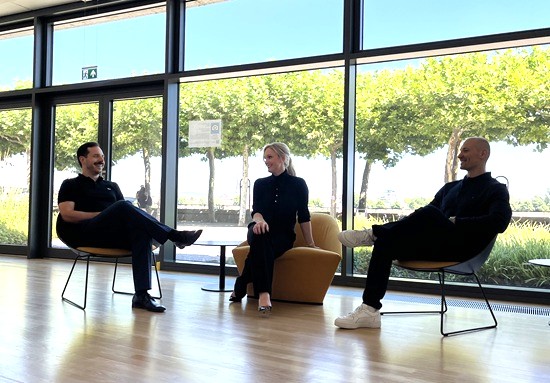
Perhaps no aspect of the neuroRAD 2026 programme embodies this philosophy better than our highlight session, ‘Standing on the shoulders of giants’. Instead of a conventional lecture, we have invited three pioneers of modern neurointervention—Hans Henkes (Stuttgart, Germany), René Chapot (Essen, Germany) and Ajay K Wakhloo (Boston, USA)—to join us for a moderated conversation.
Which ideas succeeded, and which did not? Where did resistance emerge along the way, and how was it overcome? How do each of them view the key developments of recent decades and where do their assessments diverge? And, most importantly, what would they do differently today—and what advice would they give to those now entering the field or seeking to advance it further?
We hope the session will combine scientific insight with personal stories, differing perspectives and, perhaps, a few moments of humour. For younger neuroradiologists in particular, there is enormous value in understanding not only what changed our field, but also how those changes came about. Looking towards the future is much easier when we understand the path that brought us here.
Creating space for the next generation
That dialogue between generations runs throughout neuroRAD 2026. Young colleagues should not simply attend a congress; they should actively help shape it. At neuroRAD 2026, they are represented not only among the participants, but also on the programme committee, and as session chairs and speakers.
Education, mentorship and opportunities for exchange are central to this year’s programme. The joint meeting with the 8th German Stroke School reinforces this focus, as do a dedicated aneurysm coiling course, and courses on artificial intelligence (AI) and advanced imaging. Together, they underline the importance of developing the clinical, diagnostic and interventional expertise required for modern patient care.
Our aim in Mainz is to bring together those who helped build, establish and advance modern neuroradiology with those who will determine where it goes next
This commitment extends across the breadth of neuroradiology. Dedicated teaching sessions range from head, neck and spinal imaging to vascular imaging, complemented by focused examination preparation. Alongside these educational formats, the main scientific programme explores neurovascular disease, neuro-oncology, neuroinflammation, neurodegeneration, epilepsy and paediatric neuroradiology, among other areas.
The programme also looks beyond individual diseases and technologies to some of the broader forces that will shape our profession. In his keynote, ‘Quo vadis? The future of data-driven diagnostics’, Joe Lennerz—medical director of pathology innovations at Natera—will explore how AI and increasingly data-driven healthcare are transforming diagnostic medicine, and whether technological progress can be matched by the financial, regulatory and policy frameworks needed to translate innovation into clinical practice.
This broader perspective is important to us. How we organise care, educate specialists and respond to changing healthcare systems will matter as much as any single technical advance, and these questions are explored further in a dedicated health policy session.
As such, for us, ‘next generation’ does not refer only to new devices or technologies. It also means asking how we educate, collaborate and communicate differently, and how we prepare young neuroradiologists not simply to experience the future of our specialty but to take responsibility for shaping it.
The emphasis on exchange will continue beyond the scientific programme—our ‘Next Gen Connect’ social evening reimagines the traditional congress social as an informal space for interaction across generations, combining food trucks, live music and art with lounges and opportunities to meet, talk and build new connections.
Taking neuroradiology beyond the congress hall
One initiative we are particularly excited about is the ‘Public experience’, which will take neuroRAD beyond the traditional boundaries of a scientific meeting. Neuroradiologists are central to the diagnosis and treatment of some of the most devastating neurological diseases, yet few people outside medicine have a clear idea of what neuroradiology is or what a neuroradiologist actually does. We want to change that.
Through interactive demonstrations, expert interviews, simulation stations and hands-on experiences, patients, families and members of the public will have the opportunity to discover how modern interdisciplinary stroke diagnoses and treatments work. They will be able to explore imaging, learn about stroke symptoms and prevention, and gain insight into endovascular procedures that can restore cerebral blood flow and fundamentally alter a patient’s outcome.
For us, public engagement is not an addition to the scientific programme; it is part of our responsibility as physicians and as a professional society. If we want society to understand the importance of stroke prevention, rapid diagnosis and specialised treatment, we need to communicate beyond our own professional community. And, if we want the next generation to become interested in medicine, neuroscience and neuroradiology, we also need to make our field visible.
The future is already here
The development of neuroradiology over recent decades has been extraordinary. Procedures that once seemed impossible are now routine, and diseases for which we previously had little to offer can increasingly be treated through minimally invasive approaches.
However, the future of our specialty will not be defined by technology alone. It will depend on whether we can translate innovation into better patient care, educate and inspire the next generation, collaborate across disciplines and national borders, and communicate the value of our work to patients and the wider public.
Our motto deliberately says ‘the future is now’ because change is not something waiting for us in five or 10 years. Young neuroradiologists are already conducting research, treating patients, developing technologies and taking on leadership roles. At the same time, everything we do builds on the experience of those who transformed our specialty before us, those who taught us, and those who continue to move the field forward today.
In Mainz, we want these generations to meet. If neuroRAD 2026 succeeds in creating a place where pioneers, established leaders, role models and young physicians learn from one another; where scientific innovation is accompanied by education and debate; and where neuroradiology opens its doors to the public, then ‘next generation’ will be much more than a congress motto. It will describe where our field is heading.
Daniel Kaiser is a neuroradiologist based at the University Hospital Dresden in Dresden, Germany who serves alongside Katharina Wenger-Alakmeh and Roland Schwab as congress president of neuroRAD 2026.
The author declared no relevant disclosures or conflicts of interest.