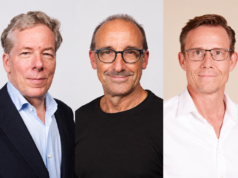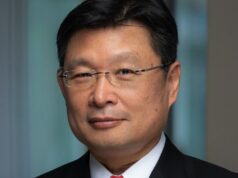
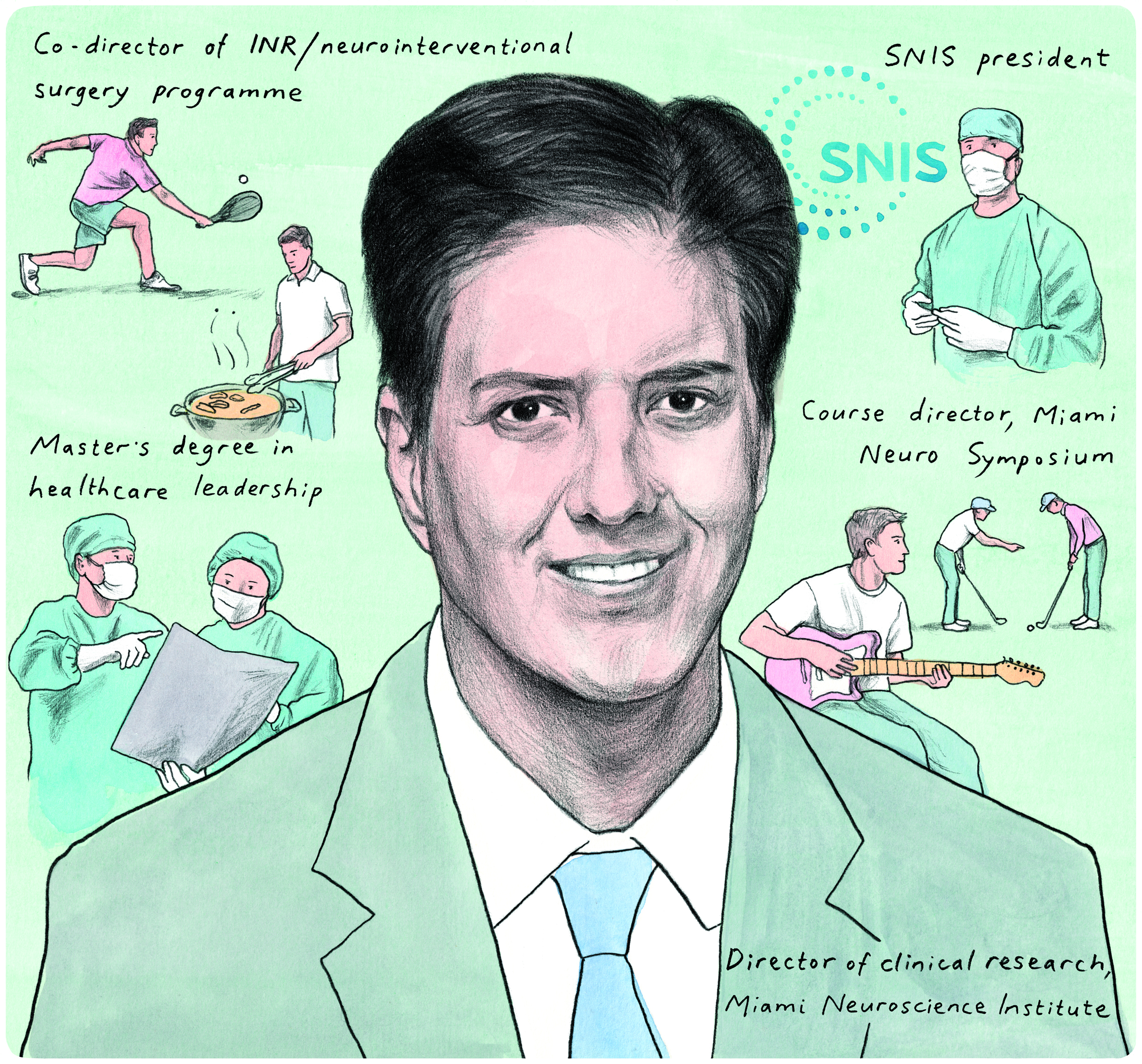
A rockstar inside and outside of the neurointerventional community, guitar aficionado Guilherme Dabus (Miami, USA) is the current president of the Society of NeuroInterventional Surgery (SNIS), and has been involved in a multitude of impactful clinical studies including CREST-2, HEAT, SCENT, SUMMIT MAX and TIGER. Having finished his medical education and residency training in Santos, Brazil, he moved on to a fellowship in the USA in 2004—and, today, is the director of clinical research and co-director of the interventional neuroradiology/neurointerventional surgery programme at Baptist Health of South Florida’s Miami Neuroscience Institute. Here, Dabus discusses all this and more with NeuroNews.
Why were you drawn to a career in medicine and, more specifically, the neurointerventional space?
Growing up in Brazil, I was surrounded by relatives who were physicians—in particular, my father, who is my greatest influence. I watched how profoundly a single person armed with knowledge and compassion could alter the course of another person’s life. That felt like the most meaningful use of a career I could imagine. During my residency, I was naturally drawn to the procedural aspect of radiology, including biopsies, spinal procedures and, later, angiography and endovascular procedures. The first time I scrubbed in for a neurointerventional surgery during my radiology residency, it felt like standing at the edge of a frontier that nobody had fully mapped. The modern era of neurointerventional surgery was in its infancy and trying to understand where it could take us was really exciting to me. The brain is responsible for everything that makes us human including our capacity to move and breath, our memories, our language, and our personalities—and here was a subspecialty that allowed us to intervene inside that marvellous structure, through a catheter, without opening the skull. The audacity of it, and the responsibility it carries, was something I could not walk away from. Every case still carries that weight for me.
Who have your key mentors been and how have they impacted your career?
I have been extraordinarily fortunate in this regard. From my father who, as I mentioned before, has been my greatest role model and mentor, to everyone else who participated in my formative years from my medical school to my residency in Brazil and, of course, during my training at Northwestern (Chicago, USA), Mallinckrodt Institute of Radiology (St Louis, USA) and Massachusetts General Hospital (Boston, USA), I have been extremely lucky to have had many mentors. I learned that technical mastery is only the foundation—the tool to execute our job. What truly separates a good physician and neurointerventionist from a great one is judgment, humility, compassion, and the willingness to continue to improve. These mentors who shaped me most did not simply teach me procedures but showed me how to think about patients when things are not going in the direction we wanted, how to communicate uncertainty to families, and how to design a question worthy of a clinical trial. I carry their voices into my own teaching of fellows and medical students every day. These teachings and knowledge, I believe, need to be transferred to the younger generation. The obligation to pass it forward is something I feel deeply, especially now in a leadership role. The field’s future lives in the residents and fellows we form today.
How would you describe your experience to date as SNIS president?
It has been one of the greatest privileges of my professional life, and also one of the most humbling. When you step into a role like this, you realise quickly that the work of a society like the SNIS is not merely organisational, but also custodial. We are stewards of a specialty that has—in the span of a few decades—transformed how stroke, aneurysm and a host of devastating vascular diseases are treated. My experience as president has been marked by a genuine sense of possibility. Our membership is intellectually curious and bold, our science is accelerating at a pace difficult to follow, and our advocacy for patients continues to grow. But I have also encountered the hard realities of health equity, and the gaps in access to neurointerventional care that still exist across geographies and communities. Carrying both the privilege and the responsibility of this position simultaneously is something I do not take lightly for a single day.
As a reviewer for numerous medical journals, do you have any advice for other neurointerventionists looking to take on similar responsibilities?
Peer review is the immune system of science. It is imperfect but, without it, the literature becomes unreliable, and unreliable literature harms patients. For colleagues considering taking on reviewing responsibilities, my advice is threefold. First, review as you would want your own work reviewed: rigorously, fairly, and with specific rather than vague critique. Second, treat it as a learning exercise, not a burden. Reviewing the work of others forces you to evaluate methodology and results at a level that makes you a better researcher yourself. And, third, be honest about your limits. If a statistical approach or device technology falls outside your expertise, or if a conflict of interest exists, say so. The integrity of the process depends on that honesty. The journals that are shaping our field deserve reviewers who are as committed to rigour as the authors they evaluate.
What is the most impactful study you have been involved with?
That is a question I am not sure I have a definitive answer for. I believe all research is, somehow, impactful. The temptation is to point to the most visible work rather than the most durable. A trial that I am very proud of being part of is CREST-2. As part of the interventional management committee for the trial, I believe our thoughtful work and diligence in the selection of stenting centres was key to it reaching its outstanding stenting results. The results of CREST-2 are changing the paradigm of how severe asymptomatic carotid stenosis should be handled. SUMMIT MAX—for which I was a national co-principal investigator—was also a landmark study, being the first to compare a novel super-large-bore aspiration catheter to the largest available US Food and Drug Administration (FDA)-approved aspiration catheter in a randomised controlled trial, and demonstrating improved results for the treatment of large vessel occlusions (LVOs). Other research I believe will carry a long legacy is the work my colleagues and I have contributed to understanding the boundaries of endovascular treatment for LVO stroke, particularly in patients who fall outside the classical treatment windows.
What is the biggest challenge currently facing the neurointerventional space?
There are certainly several potential challenges, including workforce issues—such as training, burnout, second victim syndrome and moral injury—regulatory and policy issues, and payer down pressure on reimbursement; however, in my opinion, our biggest challenge is access. We have built extraordinary tools and accumulated compelling evidence, but a patient in a rural county or a developing nation, or without adequate insurance, does not benefit from any of this if they cannot reach a centre capable of delivering it. The science is outpacing the systems, and that gap is a moral problem as much as a logistical one. Within the USA, the regionalisation of stroke care has improved outcomes in metropolitan areas, but the map of who receives guideline-based neurointerventional therapy is still drawn in ways that correlate with geography, race, and socioeconomic status. The work of the next generation of leaders in this field will not only be in the angio suite. It will be in policy rooms, in hospital boardrooms, and in communities that have never seen a neurointerventionist. I believe the SNIS has a role in that work and I hope we will continue to push that agenda forward.
Which areas of the neurovascular field do you think will witness the most innovation over the next 5–10 years?
Our field continues to evolve at an exhilarating pace, and we will continue to evolve our treatments of vascular arterial diseases like strokes, aneurysms and carotid disease. However, we will increasingly be treating other types of disease—such as venous disorders, cerebrospinal fluid disorders, migraines, neuro-oncological problems, and degenerative diseases—using the endovascular route. Automation, non-invasive imaging integration, artificial intelligence, brain-computer interface devices and robotics will be incorporated more and more into our daily practice, assisting our treatments and benefitting our patients. The integration of real-time predictive feedback into procedural decision-making will make our interventions more efficient and effective, and safer. As an example of this transformative future, long-distance, robotic-assisted neurointerventional procedures are no longer hypothetical. The prospect of a skilled interventionist guiding a robotic system from hundreds of miles away, bringing subspecialty expertise to a patient who would otherwise have none, is one of the most profound equity-levelling possibilities I can envision in medicine. When I imagine the neurointerventional suite of 2035, it looks very different to today—and that is not a source of anxiety. It is a source of profound motivation.
What are your interests outside of medicine?
I play electric guitar. I used to do it a lot, playing all kinds of rock, hard rock and heavy metal as part of a band in my late teens and early 20s, and it remains my main hobby. I also enjoy cooking, in particular grilling, and spending time with family and friends. I enjoy playing any kind of racquet sport—tennis, beach tennis, pickleball—with friends, and playing golf with my father. I also love to watch and cheer for my kids in their sports, including basketball, swimming, and track and field.
What is your favourite band?
Growing up, I used to listen to a lot of instrumentalists and hard rock/heavy metal bands. But I don’t have one favourite band; I have several! Honestly—and as expected—my musical influences and tastes have evolved significantly over the years, becoming quite eclectic. I am proud to say that I enjoy any kind of music that is well played. Commercial success, for me, does not matter when it comes to music. I listen to Música Popular Brasileira (MPB), classical music, jazz, blues, country, pop, and all varieties of rock, old and new.
If you had not chosen a career in medicine, what would you likely be doing for a living today?
I have a philosophy of not thinking of ‘ifs’. There is no way for me to tell what my career would be if I had not chosen medicine or neurointerventional surgery, but I hope I would have chosen a career that would not require me to go to work in the middle of the night…
FACT FILE
Current roles:
- Medical director of clinical research; co-director of interventional neuroradiology; co-director of neuroscience operations, Baptist Health Miami Neuroscience Institute
- Clinical professor, Florida International University
- President, Society of NeuroInterventional Surgery
Education:
- 2001–2004: Residency, radiology, State University of Campinas
- 1999–2000: Internship, Santos School of Medical Sciences
- 1995–2000: Medical degree, Santos School of Medical Sciences
Awards (selected):
- 2022: Fellow of the American College of Radiology
- 2018: International Visiting Professor of the Radiological Society of North America— Indonesia
- 2015–2018: Best Doctors Awards
- 2015: Fellow of the American Heart Association Stroke Council