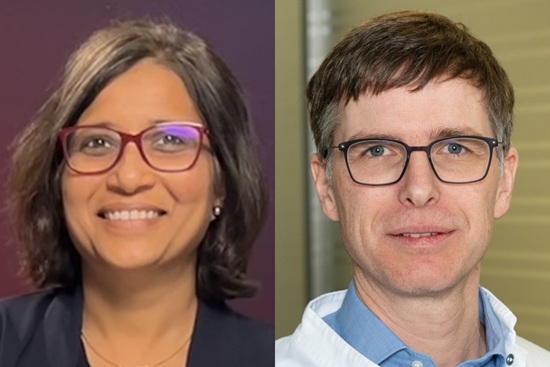
Following the release of new findings from a survey conducted by the European Stroke Organisation Trials Alliance (ESOTA) on how clinical trials in stroke care are funded, Smriti Agarwal (Cambridge, UK) and Michael Knoflach (Innsbruck, Austria)—alongside members of the ESOTA steering group—provide a closer look at these data and their wider significance.
Major advances in stroke medicine have been made possible by publicly funded, rigorous, well-designed randomised controlled trials (RCTs). Yet, despite the central importance of clinical trials in driving progress, the public funding landscape for trials across Europe remains unclear.
A recent survey conducted by ESOTA offers an important perspective on this issue. By systematically assessing public funding for investigator-led stroke RCTs across Europe between 2022 and 2023, the survey provides a glimpse into the resource allocation for European trials. Across 13 responding countries, the number of grant applications submitted during the study period varied widely, ranging from none to as many as 17 per country. The success rates were also highly variable, ranging from 0% to more than 60%.
However, perhaps the most striking observation is the absence of jointly funded cross-border trials during the survey period. In an era where large, multicentre, international studies are essential to generate robust and generalisable evidence, the lack of European co-funded trials represents a major missed opportunity.
The survey also highlighted broader structural disparities where countries with higher gross domestic product (GDP) tended to demonstrate greater funding success, whereas those with a lower GDP and higher burden of stroke often had lower success rates. The regions that face the greatest clinical need are not necessarily those best equipped to conduct or fund research. As a result, populations with the highest incidence of stroke may be underrepresented in clinical trials.
Additionally, stroke research continues to be underfunded compared with other disease areas. Data from the UK funding landscape illustrate this imbalance: stroke trials account for only a small fraction of overall RCT applications, and even fewer receive funding. While industry funding partnerships are emerging and will play a critical role in advancing trials, publicly funded studies may be more inclined to address pragmatic clinical questions—including those related to service delivery, prevention, and rehabilitation—and may also be less susceptible to conflicts of interest. However, funding alone does not explain the entire picture.
Barriers to submitting research proposals include limited infrastructure, insufficient time for clinicians to engage in research, administrative complexity, and a lack of experienced triallists in certain regions.
One potential solution lies in strengthening collaboration across Europe. ESOTA itself was established to facilitate academic collaboration, and provide a platform for sharing expertise, resources and ideas. Another is the creation of a centralised, transparent repository of funding opportunities, applications and outcomes, which could significantly improve access to information and enable more strategic planning of research efforts. A key step would be the development of mechanisms to support cross-border funding. Aligning funding calls, simplifying administrative processes, and encouraging joint applications, could greatly enhance the feasibility of multinational trials.
The ESOTA survey sends a clear message: while Europe has made tremendous strides in stroke care, the systems that support ongoing research remain fragmented and inequitable. There is a need for better communication of funding opportunities, trial coordination and supporting researchers from less experienced centres to collaborate with more established triallists.
Looking ahead, the future of stroke care will depend on our ability to sustain and expand the clinical trial ecosystem. Strengthening collaboration, reducing barriers to participation and aligning resources with clinical need are essential steps toward achieving this goal.
Smriti Agarwal is a consultant neurologist and assistant research professor in the Department of Stroke Medicine at the University of Cambridge (Cambridge, UK). Michael Knoflach is an associate professor of neurology at Innsbruck Medical University (Innsbruck, Austria). Agarwal and Knoflach led this project working with members of the ESOTA team, including Jean-Marc Olivot (Toulouse, France), Thomas Meinel (Bern, Switzerland), Christine Roffe (Keele, UK), and ESO association coordinator Noémie Le Quément.
The authors declared no relevant disclosures or conflicts of interest.