
Mechanical thrombectomy can lead to an improvement in 90-day functional outcome compared to standard medical care in anterior-circulation large vessel occlusion (LVO) stroke patients presenting 24–72 hours after symptom onset, as per the findings of the LATE-MT randomised controlled trial (RCT). However, within the trial, thrombectomy was also associated with increased rates of mortality, symptomatic intracranial haemorrhage (ICH) and other clinically relevant adverse events.
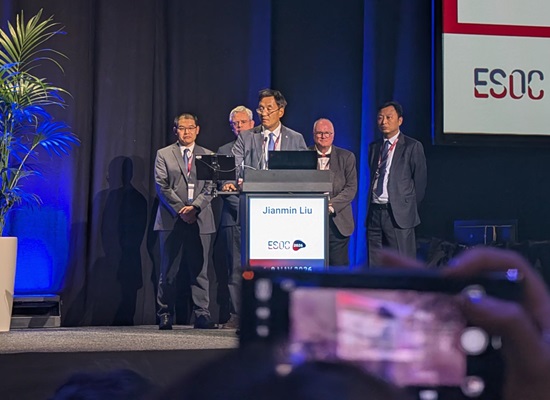
These data were presented for the first time at the 2026 European Stroke Organisation Conference (ESOC; 6–8 May, Maastricht, Netherlands) by co-principal investigator Jianmin Liu (Naval Medical University, Shanghai, China) alongside several other leading LATE-MT investigators.
Liu began by noting that thrombectomy’s benefits within earlier time windows have been well demonstrated—initially via multiple RCTs that established its clinical efficacy and safety within six hours of symptom onset back in 2015, before results from the DAWN and DEFUSE-3 trials extended this window to 6–24 hours in 2018. It has subsequently been posited that ‘slow progressors’ may also derive benefits from thrombectomy treatments, with observational studies indicating potential improvements in functional outcome in those undergoing the procedure beyond 24 hours.
With this in mind, the prospective, multicentre LATE-MT trial randomised 341 acute ischaemic stroke patients presenting 24–72 hours from time last known well to receive either thrombectomy plus standard medical care (intervention group), or standard medical care alone (control group).
As per the RCT’s primary efficacy endpoint, thrombectomy demonstrated a statistically significant improvement in functional outcome, with an ordinal shift in 90-day modified Rankin scale (mRS) scores favouring the intervention group. Analyses of these data revealed a common odds ratio (OR) of 0.57 (95% confidence interval [CI], 0.39–0.84; p=0.0046) and an adjusted OR of 0.47 (95% CI, 0.32–0.7; p=0.002). Comparisons between 90-day rates of mRS 3–5 versus mRS 0–2, and mRS 3–6 versus mRS 0–2, also indicated that thrombectomy produced better outcome relative to standard medical care. Additionally, significant improvements were seen with thrombectomy versus standard medical care regarding utility-weighted mRS, Barthel Index and health-related quality-of-life scores at 90 days, while follow-up infarct volumes were comparable between the two groups at seven days.
However, primary safety endpoint analyses in LATE-MT found statistically significant increases for both any ICH (28.3% vs 5.5%, respectively) and symptomatic ICH (4.8% vs 0%, respectively) in the intervention group compared to the control group. Severe adverse events also appeared to be more frequent with thrombectomy (22%) versus standard medical care (13.1%), as did rates of adverse events of special interest (15.5% vs 8.9%, respectively), which included procedure-related complications, neurological deterioration, brain oedema, target vessel re-occlusion, pneumonia and recurrent stroke. Lastly, the investigators were “particularly concerned” to see that the mortality rate was greater with thrombectomy (6%) versus standard medical care (1.8%), according to Liu.
The investigators relayed that further exploratory analyses generally revealed consistent findings across several prespecified patient subgroups—although the benefits of thrombectomy appeared to be greater in patients with internal carotid artery (ICA) occlusions versus other locations.
Based on these results, Liu concluded that “appropriate targeting” of mechanical thrombectomy can be considered effective within this especially late time window, with LATE-MT co-principal investigator Craig Anderson (The George Institute, Sydney, Australia) adding that these data signify a “trade-off” between preventing disability and introducing a “small risk” of further complications in patients presenting at 24–72 hours.