Cercare Medical has announced US Food and Drug Administration (FDA) 510(k) clearance for its cone-beam computed tomography (CBCT) perfusion solution, enabling qualitative perfusion assessments directly from CBCT data acquired during neurointerventional procedures.
According to the company, this clearance marks an “important step forward” in acute stroke imaging by bringing advanced perfusion analysis directly into the angio suite, allowing clinicians to assess brain tissue in real time during and immediately after mechanical thrombectomy procedures.
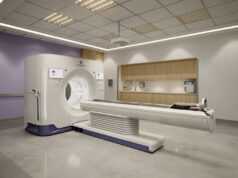
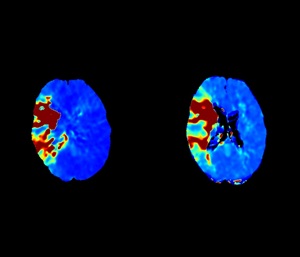
Traditionally, advanced perfusion imaging requires stroke patients to be moved between imaging systems and treatment rooms—but, with Cercare’s CBCT perfusion technology, clinicians can now generate CT-quality perfusion maps directly from standard C-arm systems while the patient remains on the treatment table.
The solution provides established perfusion parameters including regional cerebral blood flow (rCBF), regional cerebral blood volume (rCBV), mean transit time (MTT), and time to maximum (Tmax), alongside advanced physiological biomarkers like oxygen extraction fraction (OEF), capillary transit time heterogeneity (CTH) and cerebral metabolic rate of oxygen (CMRO2). Together, these maps offer clinicians deeper insight into tissue viability and microvascular reperfusion at the point of care, according to Cercare.
The company goes on to state that its technology addresses a “significant unmet clinical need” in stroke treatment. While successful thrombectomy procedures restore blood flow in major vessels, studies indicate that up to one in three patients experience insufficient microvascular reperfusion—commonly referred to as the ‘no-reflow’ phenomenon—despite technically successful recanalisation. Conventional angiography cannot visualise these capillary-level perfusion deficits.
By enabling tissue-level assessment directly inside the angio suite, Cercare’s CBCT perfusion solution may help clinicians identify persistent perfusion deficits, missed distal occlusions and incomplete reperfusion before the patient leaves the procedure room, the company adds.
“US FDA clearance of CBCT perfusion represents a major milestone not only for Cercare Medical but, potentially, for the future of stroke workflows,” said Mikkel Bo Hansen, chief scientific officer at Cercare. “The possibility of obtaining advanced perfusion imaging directly in the angio suite opens entirely new perspectives for both clinicians and patients, including future direct-to-angio workflows where selected patients may potentially bypass conventional pretreatment imaging steps. From a scientific and regulatory perspective, the clearance also validates a completely new approach to intraprocedural perfusion imaging and tissue assessment.”
“We are already seeing very significant interest from both clinicians and industry partners globally,” added Henrik Andersen, the company’s chief commercial officer. “Stroke centres are actively looking for technologies that can simplify workflows, reduce patient transfers, and support faster treatment decisions in time-critical settings. We believe the combination of conventional perfusion imaging and Cercare Medical’s advanced biomarkers, such as OEF, CTH and CMRO2, creates a highly differentiated solution with substantial clinical and commercial potential.”
The recent US FDA clearance is supported by a multi-reader, multi-case clinical study conducted at Inselspital, Bern University Hospital (Bern, Switzerland), where 13 neuroradiologists independently evaluated perfusion maps from acute stroke patients as part of the validation process.
Cercare’s CBCT perfusion solution is based on the company’s proprietary Vascular Model technology, which already supports magnetic resonance imaging (MRI) and CT perfusion imaging globally. By using the same processing engine across modalities, Cercare claims to deliver consistent and clinically familiar outputs across different imaging environments.
Siemens Healthineers collaboration
This week, Cercare also jointly announced a global collaboration with Siemens Healthineers to accelerate the adoption of CBCT perfusion in acute stroke care, and leverage its aforementioned ability to show the flow of blood through the brain’s tissue and visualise how well different areas are being supplied with oxygen and nutrients.
Within this collaboration, a joint solution will combine the Cercare Medical Neurosuite (CMN)—an integrated portfolio of advanced, vendor-neutral imaging software solutions that deliver automated perfusion analysis across CT, CBCT and MRI—with Siemens Healthineers’ Syngo DynaCT Multiphase technology, which is a 3D acquisition protocol that enables up to 10 CBCT angiography phases.
Combined, the two solutions are said to enable advanced perfusion and metabolic imaging directly in the angio suite, creating the potential to streamline workflows and shorten time to treatment in stroke.
“You can only treat what you can see,” said Johannes Kaesmacher (Bern University Hospital, Bern, Switzerland), who played a key role in establishing the scientific foundation of this solution. “CBCT perfusion delivers crucial insights right in the angio suite, when standard imaging like CT or MR is not immediately available. This supports real-time, imaging-guided decision-making in the acute phase of treatment. This includes the assessment of residual occlusions, no reflow, and complications, as well as predicting brain tissue viability and clinical outcomes.”
“By combining Cercare’s advanced perfusion software with our Syngo DynaCT technology, we deliver a comprehensive solution that supports clinicians to care for their patients across the full treatment pathway,” commented Carsten Bertram, head of advanced therapies at Siemens Healthineers. “Together, we are enabling a new standard in interventional stroke care.”