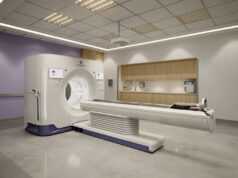

New findings from the SPINNERS trial demonstrate that—despite the trial failing to achieve non-inferiority as per its primary endpoint—the syngo DynaCT Sine Spin (Siemens Healthineers) non-contrast flat-detector computed tomography (FDCT) system provides high diagnostic accuracy for the detection of intracranial haemorrhage (ICH) in patients with suspected acute stroke, supporting faster and more streamlined care pathways.
These data were presented today by lead study investigator Marios Psychogios (University Hospital Basel, Basel, Switzerland) at the European Stroke Organisation Conference (ESOC; 6–8 May 2026, Maastricht, Netherlands).
The international SPINNERS study is described as the first prospective, multicentre, multi-reader trial to directly compare FDCT with standard multidetector CT (MDCT). As such, it provides important new clinical evidence to inform the evolution of stroke imaging and workflow optimisation, according to the researchers.
The researchers also state that rapid exclusion of ICH is essential for enabling timely and safe treatment decisions in acute stroke care, and is a prerequisite for thrombolytic therapy, making it a cornerstone of increasingly adopted ‘one-stop’ or ‘direct-to-angio’ stroke pathways. By allowing imaging directly within the angiography suite, FDCT has the potential to significantly reduce time to treatment, they add.
The SPINNERS trial prospectively enrolled 252 patients across multiple centres in Europe and the USA. Patients with suspected ischaemic or haemorrhagic stroke underwent both FDCT and MDCT within a tightly defined time window of four hours. Imaging was evaluated by a blinded, independent core laboratory using a multi-reader design, with MDCT serving as the reference standard.
While the primary non-inferiority endpoint was not met in the overall study population, FDCT demonstrated strong diagnostic performance, achieving a sensitivity of 92.6% and a specificity of 93.7% for detecting ICH. Furthermore, subgroup analyses showed particularly strong results in clinically relevant populations, with sensitivity exceeding 96% in patients with more severe neurological deficits (National Institutes of Health stroke scale [NIHSS] score ≥10) and in those with intraparenchymal haemorrhage.
Diagnostic accuracy also surpassed 95% in experienced centres—a finding that the investigators feel highlights the importance of optimised workflows and operator expertise.
“The ability to rapidly and accurately exclude ICH is critical in acute stroke management,” said Psychogios. “Our findings show that FDCT performs particularly well in patients with severe stroke and in experienced centres, supporting its role in streamlined imaging pathways.”
The inclusion of a broad and heterogeneous patient population likely contributed to a conservative overall performance estimate, the investigators claim, also positing that the study nevertheless demonstrates that FDCT delivers very high diagnostic accuracy in key clinical scenarios, supporting its targeted use in acute stroke care and reinforcing its role in advancing one-stop stroke pathways.
Additionally, the researchers highlight the potential for further performance improvements through standardised imaging protocols and focused training, ultimately concluding that non-contrast FDCT appears to be an effective and reliable tool for rapid stroke imaging despite the trial’s primary endpoint not being achieved.