
This year’s European Stroke Organisation Conference (ESOC; 6–8 May, Maastricht, Netherlands) saw late-breaking presentations from multiple clinical trials indicating the benefits of tirofiban—a potent antiplatelet agent of the glycoprotein IIb/IIIa inhibitor class—as an adjunctive therapy in acute ischaemic stroke patients.
Results from the multicentre, randomised INSTANT clinical trial showed that early administration of tirofiban significantly improved functional outcomes in acute ischaemic stroke patients who had an insufficient response to initial intravenous thrombolysis (IVT) treatment, suggesting its promise as an adjunct in this population.
Across 37 hospitals in China, the study enrolled 359 acute ischaemic stroke patients who did not have large- or medium-vessel occlusion or a cardioembolic stroke aetiology, and had an inadequate clinical response to treatment with intravenous tenecteplase. From 4–24 hours after IVT, patients were randomly assigned to receive either intravenous tirofiban or a placebo.
The results showed that, at 90 days, 63.8% of patients in the tirofiban group achieved an excellent functional outcome (modified Rankin scale [mRS] 0–1) compared to 52.2% in the placebo group, with a risk ratio of 1.22 (95% confidence interval [CI], 1.02–1.46; p=0.03). The tirofiban group also had a low rate of symptomatic intracranial haemorrhage (0.9%) and 90-day mortality (0.6%), both of which were comparable to the placebo arm.
According to the investigators, while tirofiban is commonly used in cardiovascular medicine for acute coronary syndromes, INSTANT represents the first time it has been systematically evaluated in this subset of acute ischaemic stroke patients—and therefore provides important insights into optimising stroke care by combining pharmacological approaches.
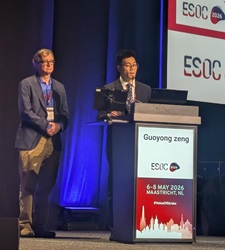
“These findings indicate that early tirofiban administration has the potential to significantly improve functional recovery in a select group of acute ischaemic stroke patients who do not achieve an adequate response to initial thrombolytic therapy,” said Guoyong Zeng (Ganzhou People’s Hospital, Ganzhou, China), lead author of the study, who presented these data alongside Jeffrey Saver (University of California Los Angeles [UCLA], Los Angeles, USA) at ESOC 2026. “Tirofiban may offer a promising adjunct treatment option to enhance outcomes in this high-risk patient population.”
Results from the INSTANT trial have now also been published in the Journal of the American Medical Association (JAMA).
New adjunct to thrombectomy
At ESOC 2026, researchers also presented results from the ATTRACTION randomised controlled trial, which demonstrated that adjunctive treatment with tirofiban following successful mechanical thrombectomy significantly improves functional outcomes in patients with acute ischaemic stroke—without increasing the risk of major safety events.
The ATTRACTION trial evaluated the efficacy and safety of tirofiban administered after successful endovascular recanalisation. In this multicentre, double-blind study conducted across 82 centres in China, some 1,380 patients with anterior-circulation large vessel occlusion stroke who achieved successful reperfusion were randomised to receive either tirofiban or a placebo. Patients in the tirofiban group received an intra-arterial bolus followed by a 24-hour intravenous infusion. The trial’s primary endpoint was functional independence at 90 days, defined as an mRS score of 0–2.
The results showed that 49.3% of patients treated with tirofiban achieved functional independence at 90 days, compared with 43.3% in the placebo group. The adjusted risk ratio for good functional outcomes with bridging treatment was 1.15 (95% CI, 1.03–1.27; p=0.01). Additionally, this functional benefit was not accompanied by a significant increase in adverse outcomes, as per similar rates of symptomatic intracranial haemorrhage (11.9% vs 9.4%) and mortality at 90 days (18.3% vs 19%) between the treatment groups.
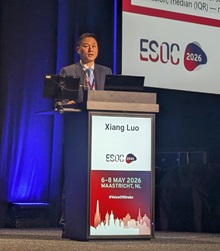
“Despite successful recanalisation, many patients remain disabled after stroke,” said Xiang Luo (Tongji Hospital, Wuhan, China), lead author of the study. “Our findings show that adjunctive tirofiban can meaningfully improve the chances of functional recovery without increasing the risk of serious complications.”
The investigators also believe these findings suggest that targeting platelet aggregation following thrombectomy may help to address microvascular dysfunction or re-occlusion, which are potential contributors to the “major unmet clinical need” whereby poor outcomes are observed despite restoration of large-vessel patency.
Stent re-occlusion and tandem lesions
New research also presented last week at ESOC 2026 indicates that low-dose intravenous tirofiban significantly reduces the risk of acute carotid stent re-occlusion in patients with acute ischaemic strokes caused by tandem lesions, doing so without causing a statistically significant increase in major bleeding complications.
According to researchers, tandem-lesion strokes—defined as simultaneous blockages of the extracranial carotid artery and an intracranial vessel—occur in up to 20% of patients undergoing thrombectomy, and represent “one of the most complex and high-risk scenarios in acute stroke care”. Despite this, the optimal antiplatelet therapy during emergent carotid artery stenting remains uncertain, with limited randomised evidence available to guide treatment decisions.
The ATILA trial—a multicentre, prospective, randomised, open-label study with blinded-outcome assessment enrolling 240 patients across 13 stroke centres in Spain—sought to provide answers that may alleviate these uncertainties. All participants in the trial presented within 24 hours of symptom onset with anterior-circulation stroke due to atherosclerotic tandem lesions, and were treated with mechanical thrombectomy and planned carotid stenting. Patients were randomly assigned to receive either low-dose intravenous tirofiban—a 500μg bolus followed by a 20-hour infusion at 200μg/h—or intravenous aspirin.
The study found that tirofiban reduced the primary endpoint of acute in-stent thrombosis within 24 hours by more than half compared to aspirin, as per respective rates of 7.2% and 16.8% (adjusted odds ratio, 0.345; 95% CI, 0.135–0.815; p=0.015), which corresponds to an absolute risk reduction of 9.6% and a number needed to treat of 10. Rates of intra-stent platelet aggregation were also significantly lower in the tirofiban group.
Furthermore, the incidence of symptomatic intracranial haemorrhage did not differ significantly between the two groups, at 7.9% in the tirofiban group versus 3.6% in the aspirin group (p=0.253), suggesting that improved efficacy was not clearly offset by increased bleeding risk. The rate at which functional outcomes (mRS 0–2) were achieved at 90 days was numerically lower in the tirofiban group, but this discrepancy did not reach statistical significance.
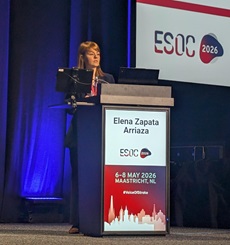
“These findings provide randomised evidence supporting a more effective antiplatelet strategy in patients with tandem-lesion stroke undergoing thrombectomy and carotid stenting,” said Elena Zapata Arriaza (Virgen del Rocío University Hospital, Seville, Spain), lead investigator of the trial. “Reducing early stent re-occlusion is critical, as it can directly impact procedural success and, potentially, long-term outcomes.”
The researchers conclude by noting that, while tirofiban improved early vessel patency, larger studies may be needed to clarify its impact on long-term functional recovery and to better define safety across broader patient populations.