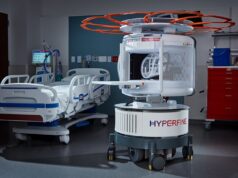
 Hyperfine has announced the presentation of results from the PRIME study—which is evaluating portable rapid imaging with the company’s artificial intelligence (AI)-powered Swoop system in medical emergencies—at the 2026 Society for Academic Emergency Medicine (SAEM) annual meeting (18–21 May, Atlanta, USA).
PRIME is a single-centre, prospective randomised controlled trial (RCT) designed to evaluate the role of portable magnetic resonance imaging (MRI) in neurological emergencies in the emergency department (ED)—including the technology’s potential effectiveness and efficiency in supporting triage decisions for a wide range of brain-related medical conditions.
Conducted at a tertiary ED, the study enrolled 100 participants and compared standard clinical workflow using conventional MRI along with a care pathway that incorporated a portable MRI system at the patient’s bedside.
Results presented at SAEM 2026 demonstrate a significant reduction in time to imaging for patients randomised to the portable MRI arm. The median time from imaging order to scan start was 1.28 hours in the portable MRI group compared with 7.76 hours in the conventional MRI-only control arm—a median difference of 6.35 hours. Some 18.6% of the scans completed revealed critical pathology, including acute ischaemic stroke, mass lesions, mass effect, and hydrocephalus, all of which were successfully detected by portable MRI and confirmed on conventional MRI, according to Hyperfine.
“These findings suggest that portable MRI can be integrated into ED workflow far more quickly than conventional MRI and can provide clinically meaningful information when time matters most,” said Charles Wira (Yale University, New Haven, USA). “By bringing advanced imaging to the bedside, portable MRI has the potential to improve diagnostic efficiency, reduce delays and support faster treatment decisions for patients with neurological emergencies.”
“Portable MRI also has the potential to meaningfully reduce ED boarding by helping to alleviate delays associated with waiting for access to conventional MRI,” added PRIME study principal investigator Kevin Sheth (Yale School of Medicine, New Haven, USA). “Reducing imaging-related bottlenecks may help ED teams move patients through care pathways more efficiently while maintaining access to advanced neuroimaging.”
Hyperfine notes that the PRIME study builds on prior research evaluating portable MRI in emergency settings and expands the evidence base by studying a broader ED population. The study was conducted using the US Food and Drug Administration (FDA)-cleared Hyperfine Model 2 Swoop portable MRI system powered by Optive AI software, which is designed to deliver sharper anatomical detail and support broader use of portable brain imaging across emergency care environments.
“Enrolment in PRIME was very fast, signalling how frequently MRI is needed as a triage tool in the ED,” commented Hyperfine president and chief executive officer (CEO) Maria Sainz. “The presentation of these data at SAEM represents an important milestone for Hyperfine and for the future of emergency neuroimaging. We believe these results reinforce the potential for portable MRI to help clinicians access actionable imaging information sooner, improve ED workflows for ruling in and ruling out pathology, and expand access to advanced brain imaging where conventional MRI remains difficult to obtain.”