
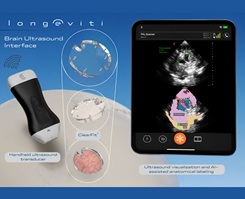
Longeviti Neuro Solutions has announced the launch of two strategic initiatives: ClearFit AI and a brain ultrasound interface (BUI). Together—according to the company—these technologies create a persistent acoustic interface to the brain, enabling real-time bedside imaging and supporting future advances in artificial intelligence (AI)-assisted neurosurgical care.
“The mission was always in the name,” said Longeviti chief executive officer (CEO) Jesse Christopher. “Longeviti exists to pursue scalable platform technologies that help create new possibilities for clinicians, researchers and patients while supporting the broader goal of protecting cognitive function and improving quality of life.”
The ClearFit AI platform combines ClearFit sonolucent cranial implants, ultrasound compatibility, clinical workflow and training support, and AI-enhanced imaging, to support the future of postoperative brain visualisation—as stated in a company press release.
Additionally, this platform enables the BUI, which is described by Longeviti as a new category of postoperative neuro access that may reduce reliance on computed tomography (CT) and magnetic resonance imaging (MRI) transport; integrate into existing neuro workflows; and position the implant site as a potential foundation for future applications currently under investigation.
Longeviti goes on to note that, for clinicians, BUI means the ability to assess the brain at the bedside, potentially reducing operational burdens like scheduling imaging, transporting a postoperative patient, or waiting for results—and, in turn, ClearFit AI makes that possible by turning the implant site into a persistent sonolucent interface, with AI-assisted imaging optimisation only available on Clarius ultrasound units. For patients, that access may mean fewer trips to the scanner, less radiation exposure, and bedside visualisation that could extend from the intensive care unit (ICU) into outpatient and recovery settings.
According to the company, as healthcare systems continue to evaluate scalable and cost-conscious technologies, ultrasound-enabled imaging approaches may offer operational advantages in select care environments.
Longeviti adds in its recent release that future clinical, operational or economic benefits will depend on regulatory review, validation activities, adoption patterns, and real-world implementation.