 GT Medical Technologies has announced new data from a multicentre feasibility clinical trial across 15 US institutions suggesting that GammaTile—a novel radiation therapy device—may help improve outcomes for patients newly diagnosed with glioblastoma. The findings were shared by Clark Chen (Brown University Health, Providence, USA) via a podium presentation at the 2026 American Society of Clinical Oncology (ASCO) annual meeting (29 May–2 June, Chicago, USA) and, according to GT Medical Technologies, provide the foundation for a planned Phase III randomised clinical trial.
“Even after a successful surgery, microscopic glioblastoma cells remain in the brain,” said Chen. “In 50–70% of patients, these cells grow quickly enough to become visible on MRI [magnetic resonance imaging] scans before standard radiation treatment can begin. In some cases, the tumour grows back to a size that requires a second surgery. This early regrowth is associated with poorer survival, creating an urgent need for treatments that can target cancer cells without affecting wound healing.”
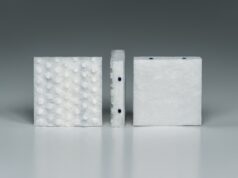
To address this challenge, investigators evaluated the GammaTile device, which is a cesium-131-based radiation therapy implanted directly into the surgical cavity at the time of tumour removal.
GT Medical Technologies notes that, unlike conventional external beam radiation therapy (EBRT) that requires waiting until the patient has healed from surgery, GammaTile begins delivering radiation immediately after the procedure—and, because the radiation only travels a short distance, it remains concentrated around the area where the tumour was removed and does not interfere with wound healing. The treatment also administers radiation doses that are two-to-four times higher than safely achievable with conventional EBRT.
Chen led the Phase I GESTALT clinical trial involving 15 hospitals across the USA to determine whether GammaTile could be safely incorporated into standard glioblastoma treatment. The study included 67 patients and found that the combined treatment—which comprised surgery and concurrent GammaTile placement followed by a shortened course of EBRT and standard chemotherapy—was safe and practical to deliver. Patients who received GammaTile did not experience more serious side-effects than those typically seen with standard treatment alone, GT Medical Technologies claims in its recent release.
The company also relays that, “most notably”, just 6% of patients experienced rapid early tumour regrowth after surgery, compared with the rates of 50–70% commonly reported when patients need to wait three-to-six weeks before starting radiation and chemotherapy. These findings suggest that delivering radiation at the time of surgery may help prevent cancer growth during this critical period, the release further states.
“These results suggest that immediate radiation treatment at the time of surgery may address one of the most significant challenges in glioblastoma care,” Chen commented. “By treating residual cancer cells during the recovery period, we may be able to reduce early tumour regrowth while maintaining the safety of standard treatment.”
“GammaTile was built to close the gap in glioblastoma care created by the wait for traditional EBRT to begin after surgery,” added Michael Garcia, chief medical officer of GT Medical Technologies. “These results show what’s possible when we stop giving residual cancer cells time to regrow between surgery and radiation. We’re grateful to Dr Chen and the entire GESTALT investigator team for the rigour they brought to this trial, and we’re energised to support the Phase III study that will build on it. Based on these findings, a Phase III randomised clinical trial—BRIDGES—has been launched to further evaluate the potential benefits of incorporating GammaTile into the frontline treatment of newly diagnosed glioblastoma.”
Additional milestones
GT Medical Technologies recently announced additional clinical data shared via a late-breaking abstract at ASCO 2026, with findings from the randomised, multicentre ROADS trial showing that patients with newly diagnosed, operable brain metastases who received surgery with GammaTile therapy were more likely to survive longer without recurrence compared to the current standard of care—surgery plus stereotactic radiation therapy (SRT). This Phase III trial randomised 230 patients across 32 centres.
According to GT Medical Technologies, the data show that the 12-month rate of tumour surgical bed recurrence was “dramatically lower” with GammaTile therapy (1%) compared to SRT (11.9%). Additionally, surgical bed recurrence-free survival, defined as the time from surgery to either tumour recurrence or death from any cause—whichever occurred first—was significantly improved with GammaTile versus SRT (10.9 months). Patients who received GammaTile also had a >50% reduction in risk of either tumour recurrence or death compared to SRT.
GT Medical Technologies goes on to note that this superior efficacy “did not come at the cost of increased toxicity or worsened quality of life”, as functional status, quality of life, time to distant brain failure, adverse events, leptomeningeal disease and radiation necrosis were similar between the trial’s GammaTile and SRT arms. Rates of treatment-related side-effects remained low and comparable in both groups, while the estimated 24-month overall survival was 61.7% for GammaTile compared with 35.7% for SRT, the company adds, also highlighting the fact that GammaTile patients completed all cranial management for the operable tumour in a median timeframe of one day compared to 30 days for patients receiving SRT.
“Surgery is the primary treatment for operable brain metastases, but tumour cells that are invariably left behind can lead to recurrence,” said Jeffrey Weinberg, who co-led the ROADS trial alongside Thomas Beckham (both University of Texas MD Anderson Cancer Center, Houston, USA). “Radiation therapy plays a critical role in eliminating these residual cells, and the ROADS data show that TBRT [tile-based radiation therapy] outperforms SRT with respect to tumour control, recurrence and overall survival. These results are well beyond what we have come to expect with SRT, and they support TBRT as the radiation therapy approach of choice for patients with newly diagnosed operable brain metastases.”
In June, GT Medical Technologies also announced the closing of an oversubscribed US$100 million Series E equity financing led by new investor Viking Global Investors with participation from key existing investors including MVM Partners, Gilde Healthcare, Evidity Health Capital, Medtech Venture Partners and FemHealth Ventures. GT Medical Technologies stated that these funds will be used to accelerate investments across commercial and operational initiatives following the release of the final data from the ROADS trial, as well as supporting continued expansion of the BRIDGES trial.
“This financing is validation of GammaTile’s potential to be a standard-of-care treatment for operable brain tumours and will accelerate our ability to bring this important therapy to even more patients,” said Per Langoe, chief executive officer (CEO) at GT Medical Technologies.