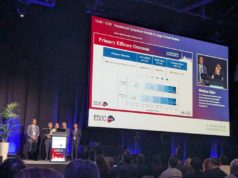
Bayer has announced late-breaking data from new analyses of the phase-three OCEANIC-STROKE study comparing asundexian versus placebo in combination with antiplatelet therapy. These analyses—presented for the first time at the 2026 European Stroke Organisation Conference (ESOC; 6–8 May, Maastricht, Netherlands)—evaluated the frequency, severity and disability of ischaemic stroke in patients after a non-cardioembolic ischaemic stroke or high-risk transient ischaemic attack, and found that the proportion of patients with a National Institutes of Health stroke scale (NIHSS) score ≥8 was lower with asundexian compared with placebo (22.9% vs 30.3%, respectively; p=0.045) among those who experienced an ischaemic stroke during the study.
Additionally, patients taking asundexian had numerically fewer disabling strokes compared to those in the placebo group (2.1% vs 3%; cause-specific hazard ratio [csHR], 0.69; 95% confidence interval [CI], 0.55–0.87).
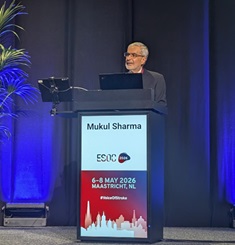
These new data were presented at ESOC 2026 by OCEANIC-STROKE co-principal investigator Mukul Sharma (McMaster University, Hamilton, Canada).
“The data suggest that, by targeting Factor XIa, we are not just preventing more strokes; we are ensuring that, if a stroke occurs, it is less debilitating for the patient,” said Sharma. “The fact that we achieved this without increasing the risk of haemorrhagic transformation is a significant step forward in secondary prevention.”
“When a patient has another stroke, we know those events are often more severe and more likely to result in disability,” added OCEANIC-STROKE co-principal investigator Ashkan Shoamanesh (McMaster University, Hamilton, Canada). “These new analyses about stroke severity and disabling stroke are highly relevant to the stroke community as we continue to evaluate multiple aspects of asundexian in the OCEANIC-STROKE study.”
A total of 902 incident ischaemic strokes occurred during the OCEANIC-STROKE study—384 (6.2%) with asundexian and 518 (8.4%) with placebo—and were evaluated for stroke severity as well as whether they were classified as disabling or fatal. Stroke severity was assessed using NIHSS scores during hospitalisation and stratified by scores of ≤3, 4–7, and ≥8. Disabling stroke was defined as a modified Rankin scale (mRS) score ≥3 or a ≥1-point increase in mRS for patients with a baseline mRS ≥3.
In addition to the study’s aforementioned findings on stroke severity and disabling strokes, researchers observed that, among ischaemic strokes that did occur, 40 patients (10.4%) required acute intervention—intravenous thrombolysis (IVT) and/or endovascular therapy (EVT)—in the asundexian group, compared to 82 patients (15.8%) requiring acute intervention in the placebo group. More specifically, in patients who experienced an incident ischaemic stroke, 27 (0.4%) required EVT in the asundexian group versus 44 (0.7%) in the placebo group (csHR, 0.61; 95% CI, 0.38–0.99).
Additionally, in patients who experienced an incident ischaemic stroke, 16 (0.3%) experienced fatal outcomes in the asundexian group compared to 28 (0.5%) in the placebo group (csHR, 0.57; 95% CI, 0.31–1.06).
“Stroke is one of the most pressing global health challenges, with serious and lasting consequences for patients, families, and healthcare systems around the world,” said Sara Hegab, vice president, stroke and thrombosis, specialty and pipeline, US medical affairs, Bayer. “OCEANIC-STROKE reflects the strength of Bayer’s capabilities to take on complex global health challenges like stroke and the impact we hope to offer to patients. The insights from this study will continue to contribute to a deeper understanding of secondary stroke and the outcomes associated with these events.”
The OCEANIC-STROKE study previously met its primary efficacy endpoint of time to first occurrence of ischaemic stroke as well as its primary safety endpoint of time to major bleeding as defined by the International Society on Thrombosis and Haemostasis (ISTH).