 Aurenar has announced that the US Food and Drug Administration (FDA) has granted a Breakthrough Device designation to its V-Link system for the reduction of cerebral vasospasm in adults with aneurysmal subarachnoid haemorrhage (aSAH). The designation applies to the use of V-Link in adult patients—aged 22 years and older—with aSAH as an adjunct to clinical management to reduce the incidence of cerebral vasospasm while in the intensive care unit (ICU).
This designation gives Aurenar priority, interactive engagement with US FDA reviewers, and a more efficient path through the agency’s premarket process, as V-Link advances toward pivotal trials and regulatory submission, according to the company.
Aurenar’s V-Link delivers low-energy electrical stimulation to a branch of the vagus nerve through the outer ear. This is designed to help regulate the body’s inflammatory response, which plays a significant role in the secondary brain injury that can occur after a haemorrhagic stroke and other critical illnesses. The device’s simple, wireless design is intended to allow neuro-intensive care physicians and ICU nursing staff to use the device efficiently, Aurenar further claims.
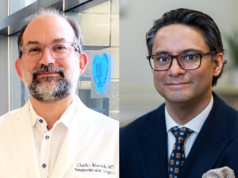
“Breakthrough Device designation is an important validation of both the science behind V-Link and the urgency of the problem it addresses,” said Eric Leuthardt (Washington University School of Medicine, St Louis, USA), founder and chief executive officer (CEO) of Aurenar. “Families watch helplessly as vasospasm threatens patients who have already survived a devastating haemorrhage. This designation lets us work together with the FDA to bring a non-invasive therapy to these patients as efficiently and responsibly as possible.”
While cerebral vasospasm remains a leading cause of disability and death after SAH, there are currently no US FDA-approved device therapies designed to prevent it, Aurenar states.
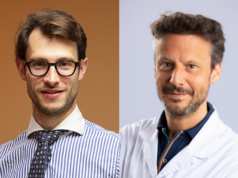
The core method underlying V-Link—known as transauricular vagus nerve stimulation—originated from research led by Anna Huguenard and Leuthardt at the Washington University School of Medicine. In a randomised clinical trial involving 27 patients with SAH, the therapy reduced moderate-to-severe vasospasm by more than 40% and was associated with improved patient outcomes. Additionally, there were no associated adverse events. A companion analysis also showed a 20% drop in 30-day hospitalisation costs directly linked to the method.
“Vasospasm has frustrated the neurocritical care community for generations, and our trial data suggest that modulating inflammation through the vagus nerve has the potential to meaningfully change that trajectory,” said Aurenar co-founder Huguenard. “Earning this designation reflects the positive clinical signal we’ve seen and moves us closer to a tool clinicians can use at the bedside.”
Moving forward, Aurenar plans to advance the development and commercialisation of V-Link while evaluating additional applications for its neuromodulation platform.