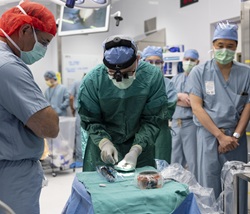
Paradromics has announced the completion of the first surgical implantation of its Connexus brain-computer interface (BCI) in the US Food and Drug Administration (FDA)-approved Connect-One early feasibility study (EFS) at University of Michigan Health (Ann Arbor, USA). The procedure was performed by neurosurgeon and biomedical engineer Matthew Willsey alongside Aditya Pandey and a multidisciplinary team.
“This technology offers new potential to help people who have lost their ability to communicate, and we are thrilled to help clinically translate this novel therapy with the team at Paradromics,” Willsey said.
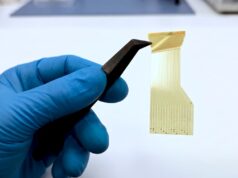
The Connexus BCI is designed to record, decode and translate neural signals through an implantable high-density microelectrode array that gathers data from the brain, and sends it to a discrete transceiver in the chest, where it is then transmitted wirelessly through the skin to an external receiver.
The present study will evaluate the long-term use of the Connexus BCI for its ability to safely restore speech and enable computer control for people living with severe motor impairment.
Following US FDA approval of an investigational device exemption (IDE) in November 2025, clinical teams at the University of Michigan, University of California (UC) Davis (Davis, USA) and Massachusetts General Hospital (Boston, USA) began screening eligible participants. The first participant—a Michigan woman who has difficulty speaking due to motor neuron disease—was enrolled and implanted by Paradromics, the University of Michigan, and Willsey, and will be followed and evaluated over the next six years.
“This implant marks a major milestone for Paradromics and for the future of high-performance BCIs,” said Matt Angle, chief executive officer (CEO) and founder of Paradromics. “Our team has spent years building a device designed to restore communication in a way that reflects the speed, complexity and individuality of human expression. For people living with severe motor impairment, the ability to communicate is central to agency, identity, and connection. We are honoured to begin this clinical study with our first participant, and grateful for the trust she and the clinical team have placed in us.”
“The Connexus BCI reflects decades of progress across the intracortical BCI research community,” added David Brandman (UC Davis, Davis, USA), lead principal investigator of the Connect-One study. “With the Connect-One study, we have an opportunity to evaluate that progress in a rigorous clinical setting and better understand its potential to help people regain communication.”
This implantation builds on Paradromics’ first successful temporary Connexus BCI implantation, which was completed at University of Michigan Health in 2025 as part of epilepsy research led by Willsey and his team, and confirmed that the device could be safely placed into the brain and reliably record brain signals.
The Connect-One study is the first in a series of clinical applications planned for the Paradromics BCI platform, as per a press release from the company.