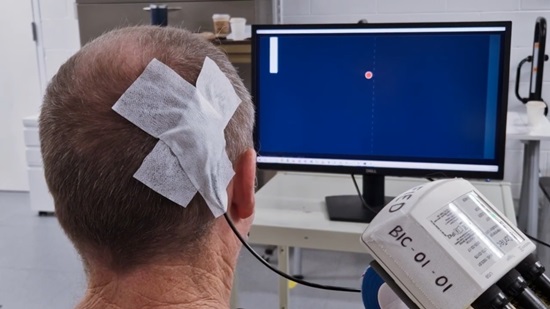
CorTec has announced that the first participant in the University of Washington’s (Seattle, USA) National Institutes of Health (NIH)-funded clinical trial of the Brain Interchange brain-computer interface (BCI) system has successfully controlled a computer through thought alone—including a functional demonstration of the video game Pong—using the implanted device and cortical electrodes placed to support his motor recovery after stroke.
In a press release, CorTec says this is the first reported instance worldwide in which a single, fully implanted, wireless BCI system has demonstrated both brain stimulation for therapeutic stroke rehabilitation enhancement and thought-based computer control in the same patient using identical hardware.
“For the first time, we are decoding real-time intent from a fully implanted BCI in an individual with stroke, and the signals are clear and consistent,” said Jeffrey Herron (University of Washington School of Medicine, Seattle, USA). “The same capability could ultimately serve patients with a wide range of neurological conditions.”
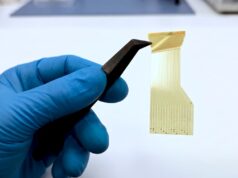
During experimental BCI sessions, the patient thinks of moving his arm, without any physical movement. The Brain Interchange implant records the corresponding cortical activity through its AirRay electrodes placed on the surface of the brain and transmits this wirelessly to an external computer, where advanced algorithms decode the signals in real time and translate them into control commands. In an initial demonstration, the patient was able to play the Pong video game through thought alone—and within about two hours after being introduced to the concept of controlling a computer with his mind.
A “remarkable” aspect of this study, according to CorTec, is that no modification to the implanted system was required. The Brain Interchange—the same fully implanted, wireless device delivering therapeutic cortical stimulation for stroke rehabilitation—performed the neural decoding using identical hardware and the same surgical placement.
“This is not a strategic pivot and not a new product,” stated CorTec chief executive officer (CEO) Frank Desiere. “It is empirical proof of what we have been building for more than a decade. The same implant that helped the first participant regain motor function after stroke now also enables him to control a computer through thought alone. We know of no other fully implanted, wireless BCI platform technology worldwide that has demonstrated this dual clinical capability in a single patient.”
“Our wireless implant system delivers both therapeutic stimulation, and real-time neural sensing and decoding, using soft electrodes that are positioned on the brain surface,” added Martin Schuettler, chief technology officer and co-founder at CorTec. “Without the need to penetrate brain tissue, our technology enables long-term safety for the patient.”
CorTec details that the demonstration in question took place after the first participant completed the rehabilitation programme in an ongoing early feasibility study—nine months post-device implantation. The study is being co-led by Jeffrey Ojemann (University of Washington, Seattle, USA) and Steven Cramer (University of California [UCLA], Los Angeles, USA).
As this clinical programme continues to advance, CorTec is establishing Brain Interchange as a platform for a new generation of closed-loop neurotherapies across stroke rehabilitation, BCI for paralysis, epilepsy, and treatment-resistant depression, the company also notes.