
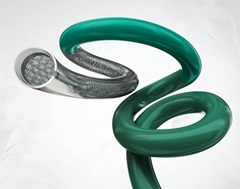
Terumo Neuro has announced the publication of results from RESTORE—a prospective, multicentre, single-arm, observational registry designed to describe procedural, functional, imaging and safety outcomes associated with physician-directed mechanical thrombectomy procedures within real-world clinical practice—in the Journal of NeuroInterventional Surgery (JNIS).
The registry enrolled 710 patients between June 2022 and December 2024. Devices used as first-line treatment in the observed procedures included the Sofia family of catheters and the Eric retrieval device, alone or in combination.
Among the 688 patients included in the published analysis, the authors reported a 93% rate of final successful reperfusion, defined as a modified thrombolysis in cerebral infarction (mTICI) score ≥2b. Additionally, rates of first-line reperfusion and first-pass successful reperfusion—both defined as mTICI ≥2b—were 75.4%, and 60.8%, respectively.
Some 52.9% of patients included in a 90-day modified Rankin scale (mRS) analysis achieved functional independence (mRS 0–2), while 55.7% of patients with a premorbid mRS score of 0–2 achieved mRS 0–2 at 90 days. Other notable findings included a 0.6% rate of symptomatic intracranial haemorrhage within 24 hours, a 0.4% rate of embolisation to new territory, and a 3.5% rate of device-related serious adverse events.
The publication also reports median times of 13 minutes from puncture to clot contact, and 17 minutes from puncture to successful reperfusion. Successful navigation was reported in 97.4% of cases.
According to Terumo Neuro, angiographic outcomes were independently assessed by a core lab, and safety outcomes were reviewed and adjudicated by a clinical events committee. The company further states that, within RESTORE, final reperfusion may reflect additional passes and/or adjunctive or rescue therapy after first-line device use, with the publication also noting that data on device-specific crossover or use of rescue devices were not available with sufficient granularity to attribute final reperfusion solely to the first-line device.
In RESTORE, treatment windows, device selection and procedural strategy were determined by the treating physician according to local standards of care and as a part of routine clinical practice—as opposed to being assigned by the study protocol—with the registry collecting data on these procedures for research purposes.