Sensome has announced successful proof-of-concept (POC) cases using its Clotild smart guidewire system with commercial and next-generation robotic systems from Robocath to access and characterise clot in cerebral blood vessels.
According to Sensome, this effort demonstrates the feasibility of using the company’s smart guidewire technology with any robotic system accessing the vasculature to provide valuable, sensor-obtained biological intelligence that can enhance a procedure.
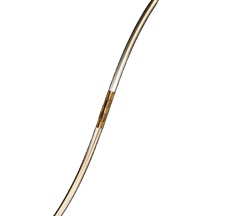
The Clotild clot-sensing guidewire integrates the “world’s smallest” electrical impedance sensor with predictive models, and is designed to instantly identify clot composition and true clot position in situ to reduce guesswork and inform treatment approaches during mechanical thrombectomies, Sensome further claims.
These POC robotic procedures were performed using the Clotild guidewire to navigate and sense tissue in the hands of Robocath’s R-One commercial robotic system—and a next-generation robot under development—in a silicone model of the brain with animal clot inserted to mimic a stroke.
“The prospect of using robotics and AI [artificial intelligence] to improve safety and efficiency in minimally invasive neurovascular interventions, such as thrombectomy, is exciting to us as physicians as we look to optimise our outcomes,” said Raphaël Blanc (Adolphe de Rothschild Foundation Hospital, Paris, France), who performed the POC cases. “The technology also has the potential to expand access to thrombectomy to rural areas, where a local robot could perform thrombectomy driven by remote experts from high-volume centres. Using the smart guidewire instead of a conventional guidewire provided me with seamless navigation and in-situ clot information that I cannot get any other way. Combining robotics with better information through sensing may become the future of thrombectomy.”
“This experience shows us that our clot-sensing guidewire has the potential to become the guidewire of choice for any medical robotic system that steers a wire,” commented Franz Bozsak, chief executive officer (CEO) and co-founder of Sensome. “By successfully combining our breakthrough sensor technology with robotics, we are taking an important step towards physical AI, where, over time, sensor‑derived data from clot and other tissue can feed our AI database to support easier and more precise device selection, positioning, and delivery.”
“We are excited to see that simply swapping to a smart wire with our robot can obtain procedural data with the potential to make robotic surgery even safer. A robot that can differentiate between clot and vessel wall, and react accordingly, has the potential to limit risk and optimise safety for any robotic thrombectomy,” added Philippe Bencteux, president and founder of Robocath. “Combining the intelligence from smart devices with our own robotic intelligence will ultimately enable us to provide a new level of precision and care for patients with acute ischaemic stroke.”