 Imperative Care has announced that initial patients have been enrolled in the ADAPT 2.0 clinical study. This prospective, multicentre, open-label observational study is evaluating the effectiveness, safety and clinical outcomes of the ADAPT 2.0 technique using the Zoom stroke system to treat patients with acute ischaemic stroke.
“This study is designed to further examine the potential clinical benefits of the ADAPT 2.0 technique, enabled by the Zoom stroke system, to achieve reperfusion success along with reduced time to final reperfusion—which are important indicators of long-term patient outcomes. Recent research found that procedure time may be a stronger predictor of clinical outcomes than first-pass effect,” said David Fiorella (Stony Brook Medicine, Stony Brook, USA), a national principal investigator for the study. “Through this study, we aim to generate rigorous, real-world, independently adjudicated data on the effectiveness and safety of a systems approach in stroke care. Ultimately, our goal is to advance techniques and technologies that meaningfully improve care for patients affected by acute ischaemic stroke.”
The ADAPT 2.0 study is expected to enrol up to 750 patients across up to 50 sites in the USA to evaluate first-line continuous dual-aspiration thrombectomy (CDAT) using the Zoom stroke system.
The study will assess both effectiveness and safety using established clinical endpoints while following patients for 90 days post-procedure to better understand both procedural and longer-term outcomes, according to Imperative. Its primary efficacy endpoint is the proportion of patients achieving excellent reperfusion (modified thrombolysis in cerebral infarction [mTICI] ≥2c) after treatment with the Zoom stroke system, as adjudicated by an independent core lab. The study’s primary safety endpoint is the rate of embolisation to new territory (ENT)—the movement of a blood clot or clot fragment from its original site of occlusion to a previously unaffected vascular territory.
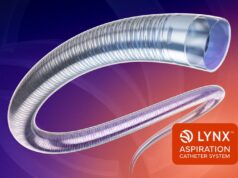
“We believe the original ADAPT [a direct aspiration first pass technique] has become a first-line approach and standard of care for the treatment of acute ischaemic stroke, and has transformed thrombectomy by demonstrating the clinical value of direct aspiration,” said Emir Deljkich, senior vice president of clinical affairs at Imperative. “Building on findings of the Imperative trial, this study is designed to evaluate the real-world performance of the ADAPT 2.0 technique, including procedural innovations intended to simplify thrombectomy workflows and support patient outcomes. The ADAPT 2.0 technique is a system-driven approach that incorporates the delivery of a 0.088-inch intracranial catheter closer to the thrombus, aspiration via an asymmetric tip designed to facilitate more complete clot ingestion, and the consistent application of CDAT.
“We believe this study represents an important step in advancing ADAPT 2.0 as a first-line thrombectomy strategy and in generating rigorous, data-driven evidence to support ongoing innovation in stroke intervention. We look forward to seeing how this clinical technique may positively impact patient care—not only by enabling excellent reperfusion, faster procedure times and a simplified technique, but in potentially supporting improved patient outcomes in the months following intervention.”
The ADAPT 2.0 study is being co-led by Fiorella alongside fellow national principal investigators Shahram Majidi (Mount Sinai, New York, USA), Justin Mascitelli (University of Texas [UT] Health, San Antonio, USA) and Max Mokin (University of South Florida, Tampa, USA).