
Perfuze has announced the publication of a peer-reviewed study in Clinical Neuroradiology comparing three aspiration thrombectomy techniques for large vessel occlusion (LVO) stroke in a benchtop model. The study evaluated super-bore aspiration using the company’s Millipede88 aspiration catheter, cyclic aspiration through a 6Fr catheter, and conventional aspiration through the same catheter. The authors report this as being the first study to evaluate these two emerging techniques against conventional aspiration.
“Two new aspiration techniques arrived at once, and neither had been compared against the other under identical conditions,” said Ameer Hassan (Valley Baptist Medical Center, Harlingen, USA), first author of the study. “In this model, getting more clot into the catheter only helped if the clot did not fragment on the way in. Super-bore aspiration gave the highest first-pass effect [FPE] and the highest final revascularisation in both territories—and the fewest fragments escaping downstream—in every clot type we tested.”
Key findings from the study include:
- An 88% FPE rate in middle cerebral artery (MCA) occlusions with super-bore aspiration, compared with 71% for conventional aspiration with the 0.071-inch catheter and 62% for cyclic aspiration with 0.071-inch catheters
- A complete clot ingestion rate of 82% in MCA occlusions with super-bore aspiration, compared with 59% for conventional aspiration and 62% for cyclic aspiration
- A final complete revascularisation rate of 91% with super-bore aspiration in both the MCA and internal carotid artery (ICA)—the highest rate of the three techniques in both territories
- Super-bore aspiration produced the lowest distal embolus burden in both territories, with cyclic aspiration producing the highest overall—attributed in part to clot fragmentation under cyclic conditions
- Regarding procedural complexity, cyclic aspiration required a wet-to-wet fluid connection that prevented supported navigation to the clot face, its waveform had to be tuned to each individual catheter, and the cyclic portion of the waveform was activated in only a third of MCA cases as clots were frequently ingested beforehand
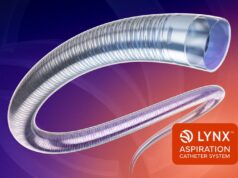
“Achieving FPE depends on how much lumen and flow you can bring to the face of the clot, and on the clot staying intact on the way in,” commented Perfuze chief executive officer (CEO) Wayne Allen. “That is why we engineered Millipede around corrugated technology from the start rather than adapting a conventional coiled or braided design. These findings are consistent with our clinical experience to date, and they capture something angiography does not show well, which is how much clot escapes downstream during retrieval.”
A Perfuze press release notes that, as leading stroke centres increasingly adopt ‘aspiration-first’ as their default approach, super-bore aspiration has become the fastest-growing segment of the mechanical thrombectomy market.
Cyclic aspiration, one of its comparators in the present study, applies a varying pressure waveform to a conventional 6Fr catheter with the aim of improving clot ingestion. The authors report in their Clinical Neuroradiology paper that the waveform can move the catheter tip and fragment the clot—particularly in softer red-cell-rich clots—contributing to the higher distal embolus burden they observed in the ICA. They also state that cyclic systems require sophisticated tube sets and vacuum pumps likely to increase device cost, going on to call for adequately powered comparative trials evaluating different aspiration techniques.
In the study, each technique was tested in 34 clot analogues per arm—soft, mixed, and stiff—in both MCA and ICA locations. The model included silicone anatomical representations of the iliofemoral, aortic arch and Circle of Willis anatomies, with pulsatile flow, blood-mimicking fluid, and physiologically representative flow rates controlled at 37°C. Endpoints were in-vitro surrogates for clinical angiographic measures, and unretrieved clot fragments were captured and quantified using gradient sieve analysis—a measure that, as per Perfuze’s press release, angiography “cannot provide”.
The Millipede88 aspiration catheter received US Food and Drug Administration (FDA) 510(k) clearance in March 2026, and is currently available in the USA through a limited market release in select comprehensive stroke centres, with broader commercialisation to follow.