Serenity Medical, a NeuroTechnology Investors (NTI) portfolio company, has announced four-to-five-year results from the RIVER study, which is described as the first multicentre evaluation of the company’s novel venous sinus River stent for the treatment of idiopathic intracranial hypertension (IIH).
Long-term follow-up data from the study—shared for the first time at the ongoing 2026 Society of NeuroInterventional Surgery (SNIS) annual meeting (20–24 July, Seattle, USA)—demonstrated durable clinical, radiological and patient-reported benefits following River stenting, with sustained improvements across symptoms including headaches, vision, quality of life, and imaging outcomes.
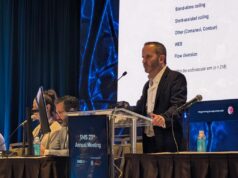
“Four-to-five years out, we’ve seen durable improvements in headache burden, vision-related outcomes, and quality of life,” said Serenity founder Y Pierre Gobin (Weill Cornell Medicine, New York, USA), who presented these results at SNIS 2026. “That gives physicians confidence that venous sinus stenting with the River stent can change the trajectory for appropriate IIH patients.”
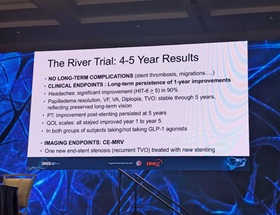
As per Gobin’s presentation, clinical improvements observed at one year remained stable or continued to improve through long-term follow-up with no evidence of in-stent stenosis or thrombosis. Additionally, the clinical benefit of River stenting was observed regardless of weight loss.
Further key findings include improvements in headache relief, with sustained improvement in headache burden, no rebound or worsening headaches, and 90% of patients achieving clinically meaningful improvement by year five, as well as papilloedema resolution, as papilloedema resolved in 95.7% of participants by year two, and in 100% by years four and five. And, regarding quality of life, significant improvements were sustained through five years, with no evidence of long-term deterioration.
“This is the long-term evidence physicians treating IIH wanted to know,” commented RIVER study investigator Adnan Siddiqui (Jacobs School of Medicine and Biomedical Sciences, Buffalo, USA). “The River stent’s purpose-built design for the venous sinuses, combined with benefits demonstrated early and held over time, sets a new benchmark for treatment of this disease.”
In March 2026, the US Food and Drug Administration (FDA) granted humanitarian device exemption (HDE) approval to the River stent, which has been specifically developed and purpose-engineered to treat severe, refractory IIH in adult patients who have failed medical therapy. Serenity also notes that it has formed a strategic partnership with Radical Catheter Technologies—another NTI portfolio company—to commercialise the River stent.