Arsenal Medical has announced late-breaking results from the EMBO-02 clinical study, in which NeoCast—a shear-responsive, solvent-free liquid embolic—was evaluated for middle meningeal artery embolisation (MMAe) to treat chronic subdural haematoma (cSDH).
Results presented at the Society of NeuroInterventional Surgery (SNIS) annual meeting (20–24 July, Seattle, USA) showed that the study met its primary feasibility and safety endpoints with positive clinical outcomes. At final follow-up, 96% of 24 participants achieved at least 50% volume resolution, and 75% had complete haematoma resolution. Functional outcomes were “strong”, according to Arsenal Medical, with 79% of patients improving versus baseline on modified Rankin scale (mRS) and quality-of-life measures through 180 days. Notably, 79% of 24 patients were treated with embolisation alone, and 10 subjects were treated without general anaesthesia.
“These NeoCast results are encouraging in ways that could have meaningful implications for both physicians and patients,” said Tim Phillips (Sir Charles Gairdner Hospital, Perth, Australia), an investigator in the EMBO-02 study. “In my experience, NeoCast demonstrated highly predictable distal penetration, allowing effective embolisation without the need to advance the microcatheter deep into the target vasculature, which simplified and streamlined the procedure. Equally important, because NeoCast is free of toxic solvents, patients experienced a virtually pain-free injection. The ability to perform MMAe without sedation represents a meaningful advancement in patient care.”
Arsenal Medical also recently announced US Food and Drug Administration (FDA) investigational device exemption (IDE) approval for RADIANT—a prospective, randomised, multicentre study for the treatment of symptomatic subacute and chronic SDH adjunctively with surgery. The trial will compare NeoCast to the Onyx liquid embolic system (Medtronic), which is US FDA-approved for the treatment of cSDH in conjunction with surgery.
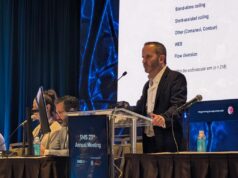
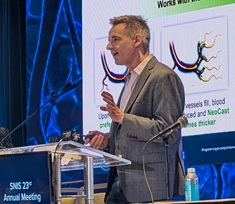
“EMBO-02 has given us a strong foundation to take the next step with NeoCast. With RADIANT, we will now evaluate those insights in a rigorous, prospective, randomised, multicentre pivotal trial,” stated David Fiorella (Stony Brook University Hospital, Stony Brook, USA), the medical monitor of the EMBO-02 and RADIANT studies who presented these late-breaking results at SNIS 2026. “There will be significant interest in next-generation embolics that can reliably achieve the level of robust distal occlusion that NeoCast demonstrated in EMBO-02 as the field of neurointervention manages this patient population and evolves new care pathways.”
“The positive first-in-human results from EMBO-02 reflect the dedication of our team, and the invaluable contributions of our clinical and scientific collaborators,” added Upma Sharma, president and chief executive officer (CEO) of Arsenal Medical. “We believe that the enthusiasm we have seen from physicians as we launch the pivotal RADIANT trial reflects significant unmet need for next-generation embolic solutions. We are energised by the momentum behind NeoCast and look forward to partnering with leading investigators to further evaluate its potential in the RADIANT pivotal study.”