A systolic blood pressure (BP) management strategy tailored to the degree of reperfusion after successful mechanical thrombectomy can improve 90-day functional outcomes in patients with acute ischaemic stroke, according to late-breaking HOPE trial results presented today at the 2026 European Stroke Organisation Conference (ESOC; 6–8 May, Maastricht, Netherlands). These outcomes were achieved in spite of the fact that the trial was stopped early due to a lack of funding.
While elevated systolic BP after thrombectomy has consistently been associated with worse outcomes, six previous randomised trials of intensive BP lowering have shown either neutral or harmful effects.
The HOPE investigators propose, however, that these prior results may reflect a uniform post-thrombectomy BP strategy that does not account for factors including the degree of reperfusion achieved, potential impairment in cerebral autoregulation of patients included in previous trials, and the absence of protocolised vasopressor support in patients who may require it.
HOPE—an investigator-initiated, multicentre, randomised trial with open-label treatment and blinded-endpoint assessment—was conducted from March 2021 to September 2025 across 11 stroke centres in Spain. The trial enrolled patients with anterior-circulation acute ischaemic strokes caused by intracranial large vessel occlusions (LVOs) within 24 hours of symptom onset who achieved successful post-thrombectomy recanalisation defined as modified thrombolysis in cerebral infarction (mTICI) ≥2b.
A total of 440 patients were randomised to either protocol-driven or guideline-recommended BP management. In the intervention arm, systolic BP targets were individualised according to final reperfusion status: 140–160mmHg for patients with mTICI 2b reperfusion and 100–140mmHg for those with mTICI 2c–3 reperfusion. The intervention was maintained for 72 hours, and included antihypertensive treatment or vasopressor support as needed.
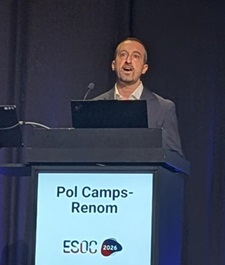
The results from this trial—presented by principal investigator Pol Camps-Renom (Hospital de la Santa Creu i Sant Pau, Barcelona, Spain) at ESOC 2026—showed that tailoring BP targets to reperfusion status translated into better functional recovery without increasing mortality.
In the trial, 60% of patients in the intervention group achieved a modified Rankin scale (mRS) score of 0–2 at 90 days compared with 46.7% in the control group (odds ratio [OR], 1.71; 95% confidence interval [CI], 1.17–2.5; p=0.005). Additionally, haemorrhagic transformation occurred at a rate of 22.3% in the intervention group versus 31.6% in the control group (p=0.03), and no mortality difference was observed, as per rates of 15% in both study arms (p=0.958). Further analyses revealed no significant heterogeneity in outcomes between different subgroups of the study population.
The investigators also report that overall protocol adherence in the trial was strong—median time within target range was 80% in the intervention group and 100% in the control group, reflecting adherence to the assigned management strategies.
“The HOPE trial suggests that BP targets after successful thrombectomy should not be uniform for all patients,” said Camps-Renom. “A recanalisation-guided strategy improved functional outcomes and reduced haemorrhagic transformation, supporting a more individualised haemodynamic approach after [mechanical thrombectomy].”