
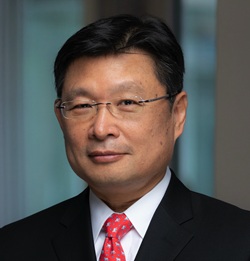
With the World Federation of Interventional and Therapeutic Neuroradiology’s (WFITN) 2026 congress (11–15 October, Busan, South Korea) looming large on the horizon, incoming WFITN president Seon-Kyu Lee (Montefiore Medical Center, New York, USA) sits down with NeuroNews to provide a snapshot of the federation’s past, present and future.
“The WFITN was established in 1991; a few pioneers from Europe and the USA had been meeting throughout the late 1980s before they decided to create this single organisation,” Lee explains. “At that point, neurointervention was a very small specialty facing a lot of difficulties, and only a handful of people across the world had been performing these types of procedures.”
Today, the WFITN stands as the only global professional organisation focused specifically on neurointerventional surgery. In addition to functioning similarly to many other neurointerventional medical societies, acting as a non-profit organisation that offers membership and holds a recurring congress, the WFITN chose to form a federation assembly in 2019 in order to “promote the coordination of neurointervention societies throughout the world”. Numerous regional societies spanning six continents have since joined this assembly.
Education and innovation
The initial bedrock of the WFITN centred on the principles that underlie neurovascular pathologies like brain aneurysms, arteriovenous malformations and dural arteriovenous fistulas—including anatomy, physiology, embryology, and understanding of microstructures—as well as education and ethical clinical practice. However, according to Lee, the federation’s purview has expanded to incorporate innovation as a more integral area of focus over the past decade.
“Neurointervention is now at the forefront of medical innovation,” he explains. “What we’ve been doing is absolutely amazing, and there has been exponential growth in patient treatment thanks to new technologies and techniques.”
Notable examples of this innovation Lee highlights include everything from acute stroke treatment using mechanical thrombectomy, to coated flow diverters for aneurysms and new embolic materials for arteriovenous malformations, to more navigable catheters and reduced-radiation imaging machines, to the integration of artificial intelligence (AI) and robotics.
Nonetheless, he reiterates that the founding principles of the WFITN remain as important as ever, also positing that there is a key distinction between training, which emphasises developing and practising technical skills, and education, which denotes a deeper and more holistic understanding of neurointerventional care. Here, Lee quotes the late surgical pioneer Clare Marx in stating that, “good surgeons know how to operate, better surgeons know when to operate, but the best surgeons know when not to operate”.
“We want to provide our colleagues that foundational knowledge of anatomy, physiology and embryology as well as ethical considerations to facilitate them becoming truly mature neurointerventionists,” he adds. “It’s about appreciating that, even with all these fantastic devices and facilities, you can choose not to operate.
“One of the challenges with education is that it takes time. It takes a lot of dedicated time to understand things like the exact details of patient anatomy. But, nowadays, in a practical sense, people don’t have that type of time, because they have so many things to do and also because there are so many manuscripts—maybe 50 neurointerventional articles per week—being published. You cannot read everything.”
Lee’s feeling is that, while recorded lectures and webinars are useful tools in this context, additional educational resources will be needed—a consideration he plans to prioritise during his tenure as WFITN president. Here, he highlights the possibility of increasing the frequency of the WFITN’s Course in Neurovascular Anatomy—which have been held annually and most recently took place from 15–18 June in Zurich, Switzerland—to more than one edition per year.
Additionally, regarding ethical practices, Lee notes that neurointerventional decision-making “can be swayed by many influences” beyond purely clinical factors, ranging from patient preference to practitioners’ own biases and industry input. With this in mind, Lee and his WFITN colleagues plan to work with other societies to create a new ethical standards document that will serve as a much-needed update to existing guidance introduced almost 15 years ago.
Across the neurointerventional space
Discussing the geographic coverage and predominant specialties within the WFITN’s membership, Lee reports that—as of its most recent biennial congress two years ago (6–10 October 2024, New York, USA)—around 50% of the federation’s members were neuroradiologists, with roughly one-third being neurosurgeons and the remainder being neurologists and interventional radiologists.
“This is understandable because the majority of our membership is from either Asia or Europe,” he explains. “About 90% of European neurointerventionists are neuroradiologists—it has always been like this—while, in North America, about 60% of neurointerventionists are either neurosurgeons or neurologists.”
“As for Asia, 60% of neurointerventionists from China are neurosurgeons, followed by neurologists and radiologists, while around 90% of JSNET [Japanese Society for Neuroendovascular Therapy] members are neurosurgeons. South Korea is very unique in that the neurointerventional field there was founded by neuroradiologists who were then followed by neurosurgeons; neuroradiology still occupies about 60–70% of the field, with neurosurgery taking up the remainder.
“The bottom line is that the WFITN was originally created by neuroradiologists—primarily physicians from France, the UK and the USA—but, over time, the populations from neurosurgery and neurology have increased significantly.”
Lee feels that, as such, the WFITN is well-placed to collaborate with any and all of the other groups, societies and organisations in this specialty, adding that the federation will work alongside and support international colleagues, agnostic to their background, in an effort to “enrich one another’s goals”.
What will the landscape of neurointerventional therapy look like as the WFITN presses forward with these efforts? According to Lee, further progress is necessary in “encouraging and promoting” interventional stroke treatment, as utilisation of mechanical thrombectomy remains low despite its proven benefits, while middle meningeal artery embolisation (MMAe) for chronic subdural haematoma (cSDH) will also continue to proliferate in line with ageing population trends.
“And, for me, the next step forward in neurointervention is going to be in neurointerventional oncology,” he posits. “Neurointerventional oncology has to be the next target after MMAe; we need to address the fact that, because of the blood-brain barrier, current intravenous chemotherapy is not necessarily that effective for brain tumours. We have been working on ways to temporarily disable the blood-brain barrier, as that will give us a very good potential avenue to resolve tumours with neurointerventional techniques. The benefit of direct intra-arterial chemotherapy has been demonstrated in retinoblastoma in children—so, we have a kind of proof of concept, and I hope there will be continued funding and initiatives to help us study this further.”