
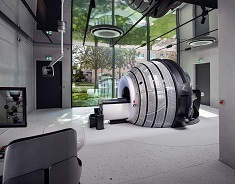
Zap Surgical Systems announced this week that it has secured US$36 million in financing led by Catalio Capital Management—a leading innovative healthcare and artificial intelligence (AI) investment firm—with continued support from Baheal, Zap’s strategic partner in China. The financing reflects strong investor confidence in the company’s technology, commercial momentum, and growth potential for non-invasive robotic therapeutics throughout neuroscience, a press release notes.
This capital will support global expansion of the company’s Zap-X gyroscopic radiosurgery platform to healthcare institutions across leading academic medical centres, community hospitals and physician-led practices. Zap recently achieved a major commercial milestone with the shipment of its 50th Zap-X system, and is currently scaling its production capacity to support increasing demand globally. The company claims that, with nearly 10,000 patients treated worldwide, a growing body of clinical evidence continues to demonstrate the advantages of gyroscopic radiosurgery in treatment precision and speed for brain tumours as well as other neurological conditions.
“This financing reflects our conviction that Zap Surgical is uniquely positioned to usher in a new wave of non-invasive radiosurgery globally,” said Catalio’s Nicholas von Guionneau, who has also joined Zap’s board as an observer. “With rising healthcare costs in developed nations and underserved populations in emerging markets, intelligent robotics will play an indispensable role in reducing cost structures while elevating the standard of care. Zap’s mission to make non-invasive brain therapy broadly accessible aligns perfectly with our strategy of backing disruptive healthcare technologies.”
Beyond well-established indications in neuro-oncology, Zap and its collaborators claim to have—over the past decade—demonstrated in multiple mammalian brain models the neuromodulatory effects of precisely targeted, low-dose ionising radiation, now referred to as ‘radiomodulation’. Preliminary data were recently reported from a first-in-human pilot study evaluating patients with severe treatment-resistant depression (TRD) treated with radiomodulation on the Zap-X platform. Based on encouraging early outcomes, broader multicentre clinical trials are now being planned to treat a wide variety of psychiatric disorders beginning with TRD and addiction, according to Zap.
“We are delighted to welcome Catalio as a new capital partner,” commented John Adler (Stanford University, Stanford, USA), Zap’s founder and chief executive officer (CEO). “As our understanding of the brain deepens, neuroscience will see unprecedented therapeutic breakthroughs over the coming decade. Scaling non-invasive, cost-effective therapy to tens of millions of patients worldwide will require strong, mission-aligned partners. Baheal has already been instrumental in advancing our presence in China, and Catalio’s strategic support will be invaluable as we accelerate adoption throughout the USA and expand our commercial footprint.”