 XCath has secured US$30 million in Series C funding, bringing the total raised since the company’s inception to US$92 million, with these latest funds set to support XCath’s ongoing efforts to bring “the world’s first commercially practical endovascular robot” to the market—and to perform a clinical telerobotic mechanical thrombectomy procedure.
The round was co-led by Crescent Enterprises and also by Fred Moll, chairman of the XCath board of directors.
“We are grateful to our investors for their conviction in our shared mission to improve clinical outcomes for patients impacted by endovascular diseases,” said XCath chief executive officer (CEO) Eduardo Fonseca. “In 2025, the XCath team advanced the frontiers of endovascular robotics. This funding accelerates our commitment to expanding access to life-saving care so that where a patient lives no longer determines whether they live.”
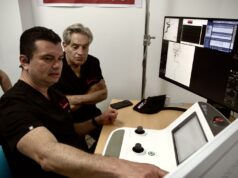
This latest round of financing follows successful first-in-human procedures conducted using XCath’s Iris robotic system to treat patients with complex brain aneurysms in November last year. Those landmark procedures—conducted by Vitor Pereira (University of Toronto, Toronto, Canada) at the Panama Clinic in Panama City, Panama with local principal investigator Anastasio Ameijeiras Sibauste—marked “the second time in history” that a surgical robot had been used in an intracranial neurovascular intervention, the company claims.
“Robotic surgery succeeds when innovation is paired with practical execution,” Moll commented. “XCath has built a promising technology foundation, and, just as importantly, a team that values rigour and appreciates perspective. I’m excited to support them as they take on the mission of globalising access to gold-standard care for stroke patients.”
“Surgical robotics represents one of the most compelling long-term investment opportunities in healthcare,” added Neeraj Agrawal, XCath board member and Crescent Enterprises executive director. “XCath has assembled an exceptional team of physicians, entrepreneurs and engineers, clearly focused on addressing a significant global healthcare unmet need.”
XCath says in a recent press release that Iris is the only endovascular robotic system currently in development to achieve intracranial navigation or neurointerventional treatment; the only robot in the world to have performed an intracranial neurovascular procedure involving the robotic manipulation of three devices; and the only system to have operated using standard monoplane imaging equipment.
“Treatment of stroke and other neurovascular diseases represents one of the most significant financial opportunities in healthcare, supported by positive reimbursement dynamics and strong demand from health systems,” said XCath chief financial officer Nicholas Drysdale. “With our continued investor support and disciplined capital deployment, XCath is positioned to build a category-leading platform in endovascular robotics.”