This advertorial is sponsored by Terumo Neuro.
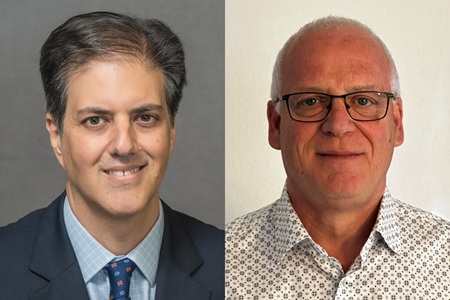
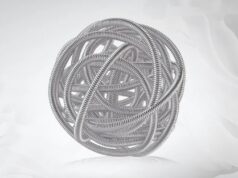
Despite decades of innovation in endovascular aneurysm therapy, recurrence and limited durability associated with these treatments remain among the most persistent challenges facing daily practice. With this in mind, Guilherme Dabus (Baptist Health Miami Neuroscience Institute, Miami, USA) and Ansgar Berlis (University of Augsburg, Augsburg, Germany) discuss their experiences with the HydroCoil™ Embolic System (HES) and the LVIS™ EVO™ Intraluminal Support Device (both Terumo Neuro) as well as the substantial body of clinical evidence on these technologies.
To date, multiple randomised studies have demonstrated comparable safety outcomes and improved effectiveness with Hydrogel coils versus bare platinum coils (BPCs).
The European GREAT trial showed a statistically significant reduction in a composite of aneurysm recurrence, retreatment, morbidity and mortality—as well as significantly higher packing density—across 484 patients with a wide spectrum of aneurysm types.1 The 600-patient HEAT trial conducted throughout the USA and Canada produced similarly positive results, including a statistically significant reduction in the primary study endpoint of recurrence without elevated risks of haemorrhage, mortality or other adverse events.2 Both trials also revealed equivalent safety profiles between Hydrogel and BPCs.
More recently, the HYBRID randomised trial involving 432 patients in Japan showed significantly lower rates of major recanalisation with Hydrogel coils compared with BPCs at one year.3
“We can see clearly, based on this strong evidence, that these coils are exactly the same in terms of safety concerns,” Dabus avers. “Effectiveness is where things get more interesting, because the studies—particularly HEAT—show lower recanalisation with Hydrogel compared to BPCs. So, if you want to decrease the risk of aneurysm recanalisation in the future, there’s a clear advantage to using Hydrogel coils.”
Here, Berlis also draws attention to the “reassuring” recurrence rate of just 4.4% seen with Hydrogel coils in HEAT.
“All these trials have the same conclusion on recanalisation rates,” he adds, “and we have learned […] that we have to achieve high-density packing with Hydrogel coils. The packing density is important, and then you have the additional effect of the expansion of the inert Hydrogel [to fill the dead space of the coil’s primary wind].”
By prospectively enrolling 771 patients with ruptured aneurysms specifically, the North American RAGE study—also presented last year—has further established the role for Hydrogel coils in these more acute cases, demonstrating an adequate occlusion rate of 86% at 18 months alongside an “exceptionally low” rebleed rate of 0.3% at 30 days and 0.5% at 18 months.4
“This shows—in a very scientific way—that the Hydrogel coils are safe and effective, and will provide complete or adequate occlusion in the vast majority of cases with a very low risk of causing problems,” Dabus notes.
Based on their extensive combined experience with second-generation Hydrogel coils, Dabus and Berlis both state that the softness, manoeuvrability and over all control offered by these devices mean they can be deployed in virtually any coiling-suitable case—with especially very small aneurysms (<3mm) being the only instances for which they are more likely to select BPCs instead.
“Hydrogel coils—particularly HydroSoft™ 3D—are very soft, very flexible, and their behaviour is very similar to other coils, meaning you can use them in all cases,” Berlis comments. “The HydroFrame™ device is [more robust than the HydroSoft device], so I use it in larger aneurysms for initial neck bridging before going ahead with the softer coils. One advantage they have is a higher volume, with the Hydrogel expanding within the metal to fill hollow spaces, and what we know from clinical trials is that small and medium-sized aneurysms have much better results with a lower recurrence rate. Overall, they are really good coils.”
While Hydrogel coils are well-suited to the majority of smaller or medium-sized aneurysms, their utility in larger and wider-necked aneurysms has also been enhanced following the introduction of the LVIS EVO device—a braided stent intended to provide additional support during coiling procedures.
Berlis led the world’s first handful of clinical cases with this device back in 2019, and has since deployed it within hundreds of aneurysm treatments.
“It has really good visibility [on imaging] due to the platinum inside the stent struts, and you can see very well how close the coils are to the struts, meaning you can make a high-density package up to the neck of the aneurysm while avoiding the coils coming into the parent artery,” he says. “This is a major advantage of the LVIS EVO device compared to other stents.”
Another key benefit Berlis cites is the LVIS EVO stent being ‘resheathable’, meaning it can be repositioned easily mid-procedure to optimise neck coverage. He has deployed the device in a variety of wide-necked aneurysms, from sidewalls to bifurcation locations, in conjunction with coils.
Dabus paints a similar picture, describing stent-assisted coiling as a “great combo” that he utilises frequently—also noting that the LVIS EVO device is particularly well-suited to parent vessels with a challenging angulation in which intrasaccular systems may face difficulties. And, although his view is that experience with both devices is necessary in order to “truly tailor” treatments, he leans towards selecting the LVIS EVO device in cases where its tighter mesh and increased metal coverage are likely to be most beneficial in promoting occlusion, such as very wide-necked sidewall aneurysms in the middle cerebral artery, anterior communicating artery, or basilar tip.
Dabus and Berlis are in broad agreement over diameter-mismatch scenarios with the LVIS EVO device too, with both saying these situations occur rarely in their practices and Dabus describing them as “manageable”. He advises operators to size stents based on the diameter of the largest vessel requiring coverage, and take into consideration the fact that the braided structure of the LVIS EVO device means it may elongate or shorten following placement.
Finally, the two physicians reference the ongoing SEALANT study evaluating aneurysm treatment using Hydrogel coils in combination with the LVIS EVO device, from which results are expected to be published soon.5
“Every physician’s job is to decide [on] the best individual strategy for each patient,” Dabus concludes. “Our job is to make sure patients are provided with the safest and most effective treatment possible, and I think the fact we have all of these devices available to us is marvellous.”
References:
- Taschner C A, Chapot R, Costalat V et al. Second Generation Hydrogel Coils for the Endovascular Treatment of Intracranial Aneurysms: A Randomized Controlled Trial. Stroke. 2018; 49(3): 667–74.
- Bendok B R, Abi-Aad K R, Ward J D et al. The Hydrogel Endovascular Aneurysm Treatment Trial (HEAT): A Randomized Controlled Trial of the Second-Generation Hydrogel Coil. Neurosurgery. 2020; 86(5): 615–24.
- Imamura H, Sakai N, Sakai C et al. Hydrogel coils in intracranial aneurysm treatment: a multicenter, prospective, randomized open-label trial. J Neurosurg. 2025; 142(6): 1803–9.
- Fiorella D, Toth G, White T G et al. Final results of the Ruptured Aneurysms treated with HydroGEl Coils (RAGE) study: a multicenter study of 771 patients. J NeuroInterv Surg. 2026. DOI: 10.1136/jnis-2026-025097.
- Clinicaltrials.gov. 2024 [cited 2026 Aug 10]. Available from: clinicaltrials.gov/study/NCT04999423.
DISCLAIMER: Physician quotes reflect individual preferences and professional experience of individuals and do not necessarily represent the views of Terumo Neuro or imply clinical superiority of any medical device. Some physicians may have affiliations with Terumo Neuro. For medical professional use only.
To read more about Terumo Neuro clinical research, visit: terumoneuro.com/clinical-studies.
For more information and product details, please refer to the Hydrogel and LVIS EVO brochures. Instructions for use/intended purpose of these devices can be found here.