
This advertorial is sponsored by B Braun.
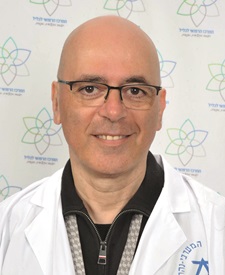
Enhanced digital capabilities, robotic assistance and the use of an exoscope—as opposed to the more traditional microscope—are among the most prominent recent developments to the neurosurgical systems used in daily practice. According to Jean Soustiel (Galilee Medical Center, Nahariya, Israel), all of these characteristics have been integrated into the Aesculap Aeos system (B Braun) to expand situational awareness, improve operator comfort, and ultimately harmonise surgical teams more effectively within the operating room (OR), leading him and his colleagues to deploy the system for the vast majority of all relevant neurosurgery procedures today. Here, Soustiel discusses his experience with Aeos to date and the ways in which other neurosurgeons may benefit from adopting it at their centres.
“I do think that, as a neurosurgical team, if you have better awareness of everything that’s going on, and you are more involved and synchronised with what you’re doing, you are able to improve things for the patient in terms of safety and adverse procedural events by having a more accurate performance within the surgical theatre,” Soustiel comments, outlining his own personal perspective.
In his view, the Aeos system carries appreciable benefits for the operators themselves too, providing a more comfortable, ergonomic surgical setting as well as potentially enabling shorter procedure times.
“This is important,” he adds. “Cervical spine degenerative disease is extremely common in endoscopy users and other aspects of medicine where your head and neck are frequently in awkward positions.”
Initial experiences
Soustiel recalls being invited to a live surgical procedure in Prague, Czechia as the first time he witnessed the potential held by exoscopes, and a driving factor in his decision to switch away from traditional microscopy.
“Immediately, I saw the truth,” he notes. “I saw what this kind of technology can do in terms of gathering people together and involving them in the surgical theatre. Everyone is aware of what is going on, which is quite important. I spoke with the head of the department at that hospital, and he said he was limiting use of the technology to simple, superficial cranial surgeries, but it was very clear—in my mind—that it could do a lot beyond that.”
According to Soustiel, while he knew there were “clear limitations” associated with traditional microscopes—including a ‘trade-off’ between magnification and field of view, and the fact that OR staff can only observe the procedure on 2D imaging—it was only retrospectively that he came to realise just how much of an improvement the Aeos system had brought to his clinical practice.
I do think that, as a neurosurgical team, if you have better awareness of everything that’s going on, and you are more involved and synchronised with what you’re doing, you are able to improve things for the patient in terms of safety and adverse procedural events
“With Aeos, you get a much larger field of view when using the same magnification, which expands your situational awareness,” he continues. “And, as a surgeon, when you’re working for hours in positions that are not very ergonomic, it makes a huge difference to be able to work comfortably—for example, while sitting—using the exoscope. It’s a different world.”
Between the microscopy equipment, surgical aspirators, navigation systems and imaging platforms, as well as additional machines electrophysiologists, anaesthesiologists and nurses may bring with them, the operating theatre is already a crowded environment. As such, accommodating a new technology is often a challenge in itself. Soustiel reports, however, that the Aeos system takes up a relatively small amount of space in the OR. In his view, this—coupled with a short learning curve and it being a “user-friendly” piece of equipment featuring a straightforward 3D imaging display—means the system can be “very easily implemented”.
“I don’t believe that your level of experience is a factor in getting along with this system,” he adds. “I can tell you, for instance, that my residents adopted it immediately, and they only want to operate with Aeos now. Getting along with the system was extremely smooth, because it’s a user-friendly technology—and, from the very beginning, we saw important advantages in our daily practice including situational awareness and involvement of the whole team. The feeling of being one single, [harmonised] team is certainly a reality when using Aeos.”
Robotic and digital features
While the ‘robotic’ aspect of the Aeos system was not a pivotal factor in his decision to implement it within clinical practice, Soustiel notes that—again, retrospectively—he discovered that the robotic arm carries “serious advantages”.
“This is something you come to fully understand upon using the system,” he says. “For instance, it is a very simple and very effective tool in anterior cervical spine surgery. When you’re looking at the intervertebral space, you need to see the nerve root exiting the spine on both sides, and you need to move from one side to the other to create the right angle. With Aeos, you can define a reference point from which the robotic arm will go and then come back to along the same axis. This feature makes our lives much easier.”
In Soustiel’s view, the digital features of the Aeos system are also “extremely important”, and provide operators with many advantages—for example, in primary brain tumour surgery, by combining fluorescence imaging and 3D visualisation of the tumour within a single picture, removing the need to alternate between the two. He describes this as a meaningful development that can optimise and reduce the procedural duration of tumour resections.
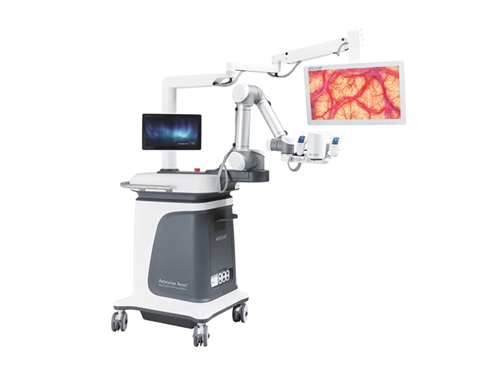
“And, [in my experience], unlike with some endoscopic systems,” he continues, “there is [minimal] lag time between what you are doing and what you see on imaging, which is very important in delicate microsurgical procedures.”
In addition to the improved comfort and security the system provides to him as a practising surgeon, Soustiel is keen to highlight the educational benefits he sees as head of his centre’s neurosurgery department.
“The residents love it because they are totally involved and they can easily see everything I’m doing,” he avers, also claiming that Aeos has had a transformational impact on surgical teaching within his hospital’s OR.
Future considerations
According to Soustiel, there are two notable limitations he has observed while using the Aeos system in his practice—neither of which, he says, are directly associated with the technology itself.
The first is its present inability to synchronise fully with third-party navigation systems to create an augmented reality overlay on imaging; something he feels is “greatly anticipated” and “clearly needed” when using a digital platform. The other limitation he highlights is a slight reduction in ‘sharpness’ and visualisation of smaller details on the exoscope’s digital images relative to those generated by a microscope. He advises that employing increased magnification can mitigate the impact of this, adding that the problem is linked to the third-party imaging screens displaying these pictures as opposed to the image quality produced by the exoscope itself. B Braun is currently evaluating ways to alleviate these two limitations within future updates to the Aeos system.
“Certainly, when we have a digital platform that can harness AR alongside the convenience of a robotic arm, it is very clear to me that that will be the end of the microscope,” Soustiel adds. “We are talking about the end of the era of optic imaging in neurosurgery.”
Finally, regarding the need for experienced surgeons to embrace rather than resist newer technologies like the Aeos system, he comments that “those who do not renew themselves from time to time will inevitably go backwards”.
“We have to do it, because it will make us better and more aware of things that should be improved,” Soustiel concludes. “It’s a necessity to look at new technologies, and think about how they can help you to circumvent the frustrations and challenges you may have in your daily practice.”
DISCLAIMER: The content and insights included in this article are completely independent, and express only the clinical perspectives of the interviewee(s).