A “pioneering” blood test used at the scene of medical emergencies can identify patients with bleeding on the brain within minutes, according to the UK charity East Anglian Air Ambulance, which has been trialling the technology in “a UK first for air ambulances” as part of its BRAIN-FIRST programme.
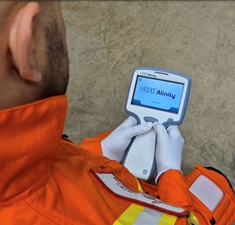
BRAIN-FIRST is enabling emergency critical care teams to perform a simple blood test on patients when they reach them to rapidly measure biomarkers associated with brain injury. The test—utilising a handheld blood analyser called the i-STAT Alinity (Abbott Point of Care)—gives doctors and paramedics biological information about the possibility of a serious brain bleed before a patient reaches the hospital.
Findings from the first cohort of East Anglian Air Ambulance patients to be treated with the analyser show that the test correctly identified every instance of an intracranial haemorrhage (ICH) that occurred, without missing a single case. The study focused on 65 patients with acute non-traumatic coma tested between January 2025 and April 2026.
An East Anglian Air Ambulance press release notes that, previously, doctors and paramedics have largely had to rely on a patient’s history, physical examination and clinical signs to assess the likelihood of ICH, with a definitive diagnosis usually requiring an in-hospital computed tomography (CT) scan. However, BRAIN-FIRST gives clinicians additional information while they are still at the scene, with the potential to support decisions about triage including which hospital a patient should be taken to and how urgently specialist neuroscience care may be required.
“BRAIN-FIRST represents a major step forward in prehospital emergency medicine,” said James Price (Addenbrooke’s Hospital, Cambridge, UK), helicopter emergency medical service (HEMS) consultant and clinical lead for research and development at East Anglian Air Ambulance. “For the first time, we can obtain biological information about possible brain injury while we are still at the patient’s side.
“Our first published results are extremely encouraging. Earlier identification of patients at high risk of a serious bleed on the brain has the potential to reduce delays to specialist treatment, avoid unnecessary secondary transfers between hospitals, and help ensure patients reach the right care, in the right place, as quickly as possible.”
The test in question uses the handheld i-STAT Alinity analyser to measure the brain biomarkers glial fibrillary acidic protein (GFAP) and ubiquitin C-terminal hydrolase-L1 (UCH-L1)—which are released into the bloodstream following injury to cells within the brain—from a small blood sample, with results becoming available in minutes.
According to East Anglian Air Ambulance, the potential impact of this extends beyond earlier diagnosis. Patients with suspected ICH may initially be taken to a hospital without specialist neurosurgical services before later requiring transfer to a major neuroscience centre—but earlier identification of patients at high risk could help clinicians select the most appropriate destination from the outset.
Following initial findings, East Anglian Air Ambulance is now working with other UK and international ambulance services to expand the evaluation of BRAIN-FIRST, and test the approach in a larger and more diverse patient population. In parallel, East Anglian Air Ambulance’s critical care teams are continuing to use the test and have now deployed it in more than 200 patients with suspected serious brain injury.
The charity is also developing BRAIN-FIRST2, which will investigate how brain biomarkers can be combined with clinical information to support more personalised and precise decision-making for patients with suspected brain injury before they reach the hospital.