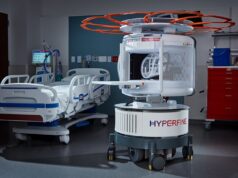
 Hyperfine has announced results from NEURO PMR—a prospective, multicentre, real-world study evaluating the clinical utility and patient experiences of the company’s portable magnetic resonance imaging (MRI) Swoop system compared to standard-of-care MRI in outpatient neurology clinics. These new data were presented by Laszlo Mechtler (Dent Neurologic Institute, New York, USA) at the 2026 American Society of Neuroimaging (ASN) annual meeting (16–18 January, San Juan, Puerto Rico).
“From a clinical perspective, I have been impressed by the image quality delivered by the Swoop system,” said Mechtler, who is the principal investigator for the NEURO PMR study. “The study results give me confidence in its ability to detect structural abnormalities encountered in routine neurological care. Portable MRI represents a groundbreaking innovation for neurology clinics, complementing tools like EEG [electroencephalography] and ultrasound to expand diagnostic capabilities at the point of care. Neuroimaging is not merely an ancillary test but an extension of the neurological examination—expanding access to this technology will put imaging back into the neurologist’s hands and meaningfully improve the quality of patient care.”
The NEURO PMR study saw two sites—the Dent Neurologic Institute and Texas Neurology (Dallas, USA)—enrol 125 patients with neurologic conditions commonly seen in the outpatient setting, including headache, dementia, multiple sclerosis follow-up and tumour surveillance. Patients received brain imaging on both the portable Swoop system (0.064T) and a conventional high-field MRI (primarily 3T), enabling direct modality comparisons.
In the study, portable MRI demonstrated 92% concordance with standard MRI in identifying the presence or absence of intracranial pathology during a blinded review by independent neuroradiologists. In unblinded paired image reviews incorporating clinical history, concordance increased to 98%, as assessed by a neurologist and neuroimager.
Additionally, patients expressed a strong preference for portable MRI, reporting that they were four times more likely to choose it over standard MRI, and, across all experience measures—including comfort, anxiety, claustrophobia, noise and overall satisfaction—portable MRI was rated superior to standard MRI too (p<0.0001). Trained clinical staff also successfully operated the system within neurology offices without the need for MR technologists, highlighting its safe and simple workflow, Hyperfine avers in a press release.
The company goes on to state that the US Food and Drug Administration (FDA)-cleared, artificial intelligence (AI)-powered Swoop system addresses challenges that have historically prevented neurology practices from bringing MRI onsite, adding that it is portable, fits in an exam room, requires no specialised sitting, shielding or helium, and plugs into a standard outlet. Furthermore, Swoop scans can be performed by existing clinic staff and are eligible for reimbursement under existing brain MRI current procedural terminology (CPT) codes after site accreditation.
“The NEURO PMR results validate the transformative role portable MRI can play in expanding imaging beyond traditional hospital settings,” said Chi Nguyen, senior vice president of office and community business at Hyperfine. “By removing the economic and operational barriers of conventional MRI, the Swoop system empowers neurology practices to deliver safe and convenient imaging in the clinic. This is a win for physicians, who gain timely diagnostic insights; a win for patients, who enjoy a better imaging experience; and a win for the healthcare system, which benefits from efficient, cost-effective care delivery.”