 iVascular has initiated the 4-NiVO clinical study to evaluate the efficacy and safety of its iNstroke 4Fr thromboaspiration catheter in acute ischaemic stroke patients with distal/medium-vessel occlusions (DMVOs) who are treated within 24 hours from symptom onset. The study aims to address the current lack of evidence supporting thrombectomy in distal occlusions, according to iVascular.
The first patient was enrolled by the team of Sándor Nardai (Semmelweis University Center of Neurosurgery and Neurointervention, Budapest, Hungary), who commented: “We are excited to participate in the 4-NiVO trial, and we are proud to have successfully enrolled the first patient. This represents an important step forward in the assessment of new tools to improve outcomes in distal occlusion stroke treatment.”
The principal investigator coordinator of the study Manuel Requena (Vall d’Hebrón University Hospital, Barcelona, Spain) added: “The start of the 4-NiVO study marks a significant milestone in our field. Its results will help strengthen and expand the clinical evidence supporting the use of iNstroke 4Fr for the treatment of DMVOs in acute ischaemic stroke, an area where high-quality data are greatly needed.”
An iVascular press release details that 4-NiVO is a prospective, multicentre, single-arm study that will enrol 57 patients over six months, with follow-up at 24 hours, 72 hours and 90 days after the procedure.
The primary endpoint of the 4-NiVO study is the rate of successful recanalisation (modified thrombolysis in cerebral infarction [mTICI] ≥2b) achieved within three passes or fewer using the iNstroke 4Fr catheter—either alone or with a stent retriever. Secondary endpoints include first-pass effect rates for mTICI ≥2b, ≥2c and 3; direct clot contact; and the proportion of subjects achieving a modified Rankin scale (mRS) score of 0–2 at 90 days (±14 days) post-procedure. Furthermore, safety endpoints comprise rates of symptomatic intracranial haemorrhage; distal or new-territory embolisation; device- and procedure-related events; and in-hospital mortality.
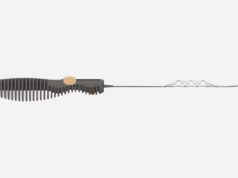
The iNstroke 4Fr device is described by iVascular as a new-generation distal aspiration catheter developed by the company for the removal of thrombi located beyond M2 segments and in highly tortuous anatomy. Featuring iVascular’s proprietary BrailTech dual reinforcement—combining nitinol and stainless steel coil design—the catheter is said to offer flexibility, kink resistance, and pushability. Its Hydrax Plus hydrophilic coating enables smooth navigation while its radiopaque C-Cut marker ensures precise distal visibility during interventions, a company press release adds.