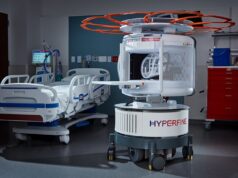
 Hyperfine has announced the enrolment of initial patients in the NEURO PMR study assessing in-office neurological evaluation with Swoop—the company’s artificial intelligence (AI)-powered portable magnetic resonance imaging (MRI) system.
The NEURO PMR study is claimed by Hyperfine to be the first multicentre, prospective observational study of its kind, comparing portable ultra-low-field MRI and conventional high-field MRI with respect to pathology findings, clinical utility, and patient experience.
Conducted with two premier private neurology practices—the Dent Neurologic Institute (Amherst, USA) and Texas Neurology (Dallas, USA)—the study utilises the latest AI-powered portable MRI technology with advanced image quality, according to the company. The study has a target enrolment of 100 patients and is expected to conclude by the end of 2025.
“Neuroimaging has become a cornerstone of modern neurological care, with neurologists ordering an average of 500 MRIs each year. Yet, in-office imaging remains out of reach for most private practices,” explained Laszlo Mechtler (Dent Neurologic Institute, Buffalo, USA), principal investigator of the NEURO PMR study. “This study aims to identify the best uses for portable brain MRI technology in a comprehensive neurology practice. The goal is to make advanced imaging more accessible, affordable, and convenient, for both patients and healthcare providers.”
Hyperfine says that its AI-powered portable MRI system removes many of the barriers that have made conventional high-field MRI systems inaccessible for placement in neurology offices. Unlike conventional MRI systems, portable MRI does not require costly siting, helium or specialised MRI technologists to operate. And, with its simple ‘plug-and-play’ design, the system enables on-demand brain imaging directly in the exam room. Furthermore, as of November 2024, Intersocietal Accreditation Commission (IAC)-accredited medical offices that use portable MRI systems qualify for reimbursement through the US Centers for Medicare and Medicaid Services (CMS).
“As more healthcare moves to outpatient settings, patients increasingly expect neurology practices to offer both diagnostic and treatment services under one roof,” commented NEURO PMR site principal investigator Gincy Samuel (Texas Neurology, Dallas, USA). “Portable MR technology aligns well with this trend, offering enhanced care and convenience in a single location—a shift we believe will only gain momentum. It provides a vital clinical function for centres that would not normally have immediate access to imaging, especially in underserved, rural and community centres.”