
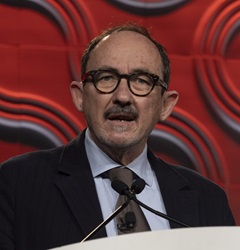
Giving the clot-busting medication alteplase at the site of a blocked brain artery after removal of a blood clot via mechanical thrombectomy may increase the number of patients who fully recover, as per preliminary late-breaking science presented today at the 2026 International Stroke Conference (ISC; 4–6 February, New Orleans, USA) by study author Ángel Chamorro (University of Barcelona, Barcelona, Spain).
While recently introduced guidelines on the early management of patients with acute ischaemic stroke from the American Stroke Association (ASA) note that thrombectomy constitutes a powerful treatment for major strokes caused by large-vessel blockages in select patients, Chamorro highlights the fact that more than half of all stroke survivors who have their large artery successfully cleared still do not go on to achieve a full recovery 90 days later.
“Stroke treatment continues to improve, and getting the right care quickly can make a real difference in a patient’s recovery and return to their everyday life,” he commented. “Even when doctors successfully reopen a blocked brain artery, novel treatment strategies such as adding alteplase to thrombectomy can further improve outcomes after a stroke.”
In the CHOICE2 trial—from which findings were reported for the first time earlier today—433 adults (median age, 76 years; 51% women) with large vessel occlusion (LVO) ischaemic stroke were treated across 14 stroke centres in Spain within 4.5–24 hours of their first stroke symptoms, making it possible to remove their clot while also maintaining the option of treatment with alteplase at the same location immediately after. Patients were randomised to receive either thrombectomy alone (n=219) or thrombectomy plus infusion of alteplase into the artery (n=214). Chamorro and colleagues note that none of the participants had any serious neurological problems before their strokes, nor presented with a stroke classified as ‘very severe’.
At 90 days after treatment, participants who received alteplase in addition to a thrombectomy procedure were significantly more likely to achieve an excellent functional outcome on the modified Rankin scale (mRS) compared to those who did not (57.5% vs 42.5%, respectively), with investigators thus reporting an absolute improvement rate of 15% regarding the trial’s primary endpoint.
“These results are practice-informing but not yet practice-changing on their own.”
Ángel Chamorro
Patients who received alteplase were also 22% less likely to have inadequate blood flow in small vessels of the brain revealed by imaging versus those who received thrombectomy only (28.6% vs 50.5%, respectively). Furthermore, those patients who received thrombectomy plus alteplase gave themselves a higher rating in terms of mobility, self-care, performing usual activities, lower pain or discomfort, and depression or anxiety—and were found to not be significantly more likely to have experienced a symptomatic intracranial haemorrhage within 24 hours post-treatment (1.4% vs 0.5%, respectively) or all-cause death at 90 days (12.1% vs 6.4%, respectively)—compared to thrombectomy-only patients.
“Mechanical thrombectomy alone is often not enough to fully restore blood flow to the injured brain, even when the blocked artery appears successfully reopened,” Chamorro continued. “Standard imaging can miss persistent blockages in the brain’s smallest blood vessels. Intra-arterial alteplase given after successful thrombectomy significantly increased the chances of an excellent recovery.”
Preliminary results from the earlier CHOICE study, published in 2022, revealed significantly better outcomes in stroke survivors who were treated with alteplase in addition to thrombectomy. However, the overall number of patients in the study was relatively small (n=121), and it was halted early due to the COVID-19 pandemic, which interfered with patient recruitment and the supply of placebos. Similar research presented last year from the ANGEL-TNK trial—which utilised the clot-dissolving agent tenecteplase—demonstrated comparable results, and the PEARL trial using alteplase also generated similar findings.
According to its researchers, notable limitations of the CHOICE2 study include the requirement for non-contrast computed tomography (CT) scanning during the follow-up period, which is reflective of real-world clinical practice yet may not provide detailed information about brain tissue injury and recovery. Additionally, the study was conducted only in Spain—although its participants were from 20 countries spanning three continents, meaning the results “should be generalisable to many populations”.
“These results are practice-informing but not yet practice-changing on their own,” Chamorro added. “While CHOICE2 strengthens the evidence that intra-arterial alteplase given after successful thrombectomy can improve recovery, broader adoption will require confirmation in additional studies, guideline review and careful consideration of patient selection. Importantly, this approach should not be viewed as a ‘one-size-fits-all’ treatment. It is most likely to benefit patients who, despite large-vessel reopening, have evidence of inadequate blood flow in their microcirculation. However, if future studies and meta-analyses confirm the safety of this strategy, it may eventually reduce the need to rely on advanced imaging techniques to identify patients with persistent perfusion abnormalities appropriate for this treatment.”
In addition to confirming the findings of CHOICE2, future research will focus on ways to treat the underlying causes leading to the disruption of blood flow in the microcirculation, the researchers aver.