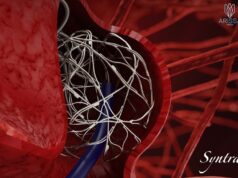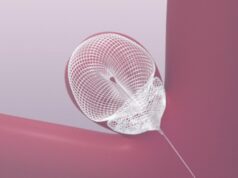
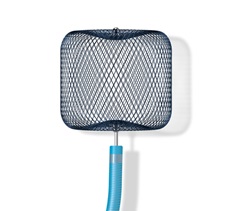
A prospective, multicentre study—published recently in the Chinese Neurosurgical Journal—has reported that the Woven EndoBridge (WEB [Terumo Neuro]) intrasaccular device can be used safely and effectively in the treatment of unruptured wide-necked bifurcation intracranial aneurysms.
The study found high occlusion stability, low complication rates, and no retreatments or deaths, at one year of follow-up. The authors therefore conclude that their findings support this minimally invasive option as a “promising alternative” to conventional techniques as well as expanding the current evidence supporting its safe and effective use in a Chinese patient population.
Wide-necked bifurcation aneurysms (WNBAs) occur at arterial branch points and, according to the study authors, are considered “particularly challenging” to treat due to their complex anatomical nature. More conventional approaches like coiling or stent-assisted techniques may require long-term blood-thinning therapy, and carry risks of thromboembolism and vessel damage, they add, whereas the design of the detachable WEB device may reduce reliance on dual antiplatelet therapy and the likelihood of thromboembolic complications as compared to techniques requiring permanent intravascular implants.
As such, “seeking safer, less invasive options”, a research team led by Hongqi Zhang (Capital Medical University, Beijing, China) and Jianmin Liu (Naval Medical University, Shanghai, China) conducted the observational ‘WEB-IT China’ study across eight Chinese hospitals between June 2017 and August 2019—investigating the WEB intrasaccular device’s ability to disrupt blood flow and promote clot formation without extending into the parent artery. The study enrolled 60 adult patients with unruptured WNBAs who were deemed suitable for WEB implantation, and each of whom underwent standardised imaging, procedural planning and follow-up at 30 days, six months, and one year.
Zhang, Liu et al report that procedural success was achieved in 98% of cases. At one year of follow-up, complete aneurysm occlusion was observed in 56% of patients, with adequate occlusion being achieved at a rate of 82%. The authors also relay that none of the patients in the study required retreatment, experienced aneurysm rupture, or died. Major adverse events occurred in two patients (3.9%), with both of these ultimately adjudged to have been unrelated to the WEB device. Functional independence—as per modified Rankin scale (mRS) scores—remained “high” throughout follow-up, with nearly all patients within the study maintaining their ability to take part in normal daily activities.
“These findings suggest that intrasaccular flow disruption can provide durable aneurysm occlusion rupture while minimising risks associated with traditional techniques,” said Zhang, also noting that the present study demonstrates that the WEB device can safely seal complex aneurysms with a high degree of stability over time—even in anatomically challenging locations like anterior communicating artery (AComA) and middle cerebral artery (MCA) bifurcations.
An accompanying press release shared by the Chinese Neurosurgical Journal states that, beyond these individual patient benefits, findings from WEB-IT China support the broader evaluation and adoption of minimally invasive intrasaccular techniques for complex aneurysms. The results also contribute “important clinical data from a Chinese population, and provide a foundation for future comparative studies and longer-term follow-up investigations”, the release notes.
“Our results demonstrate that advanced endovascular technologies can be safely adopted across diverse populations, paving the way for international collaboration and future device innovation,” Liu commented.
According to the investigators, while further research with larger cohorts and longer follow-up is needed, the current study confirms that the WEB device provides a reliable, safe and effective alternative to conventional treatments for WNBAs, setting a “foundation” for future improvements in global neurovascular care.