Royal Philips has announced that the SEISMIC research consortium—coordinated by Philips together with academic leadership from Erasmus University Medical Center (Rotterdam, Netherlands)—has been awarded funding from the European Innovative Health Initiative (IHI) to “transform neurosurgery” through the integration of minimally invasive surgical techniques and advanced imaging technologies.
A sum of €23.5 million in public funding will be complemented by €14.9 million in in-kind contributions and additional resources from industry partners, supporting a five-year research and innovation programme that also includes eight clinical studies, Philips states in a recent press release.
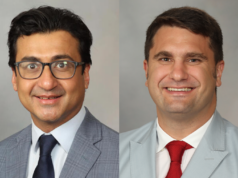
“The brain is extraordinarily complex and delicate. It defines who we are, including our intelligence, personality, and consciousness,” said Pieter Kruizinga (Erasmus University Medical Center, Rotterdam, Netherlands), academic lead of the SEISMIC consortium. “Operating on the brain remains one of the greatest challenges in modern medicine, as the margin between helping and harming a patient can be extremely small. SEISMIC is about shifting that balance in the right direction by making neurosurgical procedures less invasive, more precise, and better supported by real-time imaging, data and training. By bringing these elements together, we aim to improve outcomes for patients and enhance the way neurosurgeons work.”
“The shift from open brain surgery to minimally invasive procedures—supported by advanced imaging and precision navigation—holds tremendous potential to improve patient care,” added Bert van Meurs, chief business leader for image-guided therapy at Philips. “It’s a major undertaking and, through SEISMIC, we’re bringing together the necessary medical specialties, technology domains and patient perspectives to help break down the barriers to this transition. By combining precision surgical techniques with real-time imaging and intelligent decision support, our goal is to simplify complex procedures, improve outcomes and broaden access to advanced neurosurgical care across Europe, and beyond.”
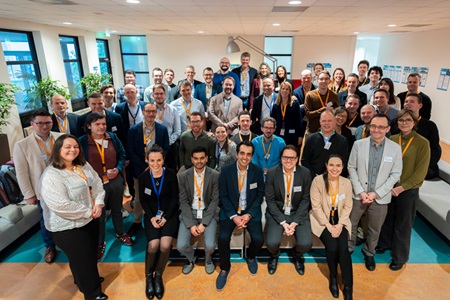
The SEISMIC public-private partnership comprises nine medical technology firms, including Boston Scientific, Bracco, Caresyntax, Demcon, and Philips, as well as two patient organisations—Fundació Ictus and Cancer Patients Europe—and seven academic institutions spanning the Netherlands, Spain and Slovenia.
Philips’ recent press release highlights haemorrhagic stroke, subdural haematoma (SDH) and brain tumours as being among the key neurological conditions for which the SEISMIC consortium is seeking to advance patient care.
“While there have been significant advances in the field of neurosurgery, minimally invasive neurosurgical techniques continue to lag significantly behind other surgical disciplines,” the release notes. “Current clinical procedures rely on large skull openings, optical and electromagnetic surgical navigation systems based on preoperative imaging, and fragmented intraoperative imaging, which disrupt surgical workflows and compromise precision. The SEISMIC project seeks to transform these potentially high-risk neurosurgical procedures into safer, faster and more accessible interventions.”
SEISMIC has been set up to develop an integrated suite of technologies, including real-time surgical navigation that combines ultrasound guidance with live X-ray imaging, highly realistic simulation platforms for clinician training, and minimally invasive biopsy and treatment techniques. The project will aim to reduce procedure times, minimise surgical trauma, and accelerate patient recovery, with the subsequent goal of improving clinical outcomes and expanding access to specialised neurosurgical care for “currently underserved populations”.
Regarding haemorrhagic stroke and intracranial haemorrhage (ICH), SEISMIC is set to explore how real-time ultrasound and X-ray imaging can guide a minimally invasive drainage device through a small skull opening to precisely reach and evacuate deep intracerebral bleeding.
In the SDH space, the SEISMIC team will investigate a single, image-guided procedure that combines haematoma drainage with embolisation of the middle meningeal artery (MMA).
SEISMIC also plans to tackle brain tumour diagnosis, chiefly by exploring whether diagnostic information can be obtained through minimally invasive, focused ultrasound-enhanced liquid biopsy, thus reducing the need for open brain surgeries to obtain tissue samples for analysis. Additionally, the SEISMIC team will assess the use of cryoablation—as opposed to open surgery—for the treatment of brain tumours, which involves introducing a cryoablation probe through a small skull opening, and guiding it to the tumour using X-ray and ultrasound imaging.