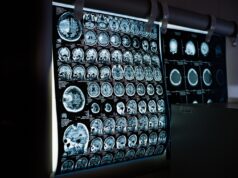

Photon-counting detector computed tomography (PCD-CT) technology has “substantially reduced” image noise and the variability of Hounsfield units (HU) versus energy-integrating detector (EID)-CT scans in a retrospective study comparing cerebral grey and white matter measurements via automated, deep learning-based brain segmentations.
Outlining their findings in the American Journal of Neuroradiology (AJNR), Alexander Rau (University of Freiburg, Freiburg, Germany) and colleagues report that outcomes favouring PCD-CT were also replicated across age-matched subsets—leading them to conclude that the potential need to adapt windowing presets with this recently established imaging technology “should be investigated in future studies” as a result.
“In clinical practice, more stable HU values and lower image noise mean that grey and white matter look more consistent from patient to patient, and scan to scan,” Rau explained, speaking with NeuroNews. “That makes it easier to spot subtle changes and to trust quantitative thresholds such as grey-white ratios. In the long run, this kind of technical robustness is a prerequisite for reliable CT-based decision-making in stroke and hypoxic-ischaemic brain injury.”
Distinguishing between grey matter and white matter is “essential” when performing CT scans of the brain, the authors write. Outlining the rationale for their study in AJNR, they note that PCD-CT technology uses a novel detection technique that could enable more precise measurements of tissue attenuation, allowing for improved delineation of HU values, as well as heightened image quality in comparison with EID-CT.
To investigate this possibility further, they retrospectively analysed a cohort of patients who received either PCD-CT or EID-CT but did not display a cerebral pathology. Rau et al report that a deep learning-based segmentation of grey and white matter was used to extract HUs—and, subsequently, grey-white matter ratio (GWR) and contrast-to-noise ratio (CNR) figures were calculated. The researchers included a total of 180 PCD-CT patients and 329 EID-CT patients. Mean ages in the two groups were 64.7 years and 59.8 years, respectively.
Rau and colleagues found that grey matter and white matter showed “significantly lower” HU values with PCD-CT (grey, 40.4; white, 33.4) compared to EID-CT (grey, 45.1; white, 37.4; p<0.001). Additionally, standard deviations of HUs were lower—for both grey and white matter (p<0.001)—and the CNR was “significantly higher” in the PCD-CT group versus the EID-CT group (p<0.001). The authors also relay that GWRs “remained constant” and were not significantly different between the two CT modalities (p>0.99), while “all findings were replicated” across age-matched subsets of 157 patients in each cohort.
“Our key message to neuroradiology is that photon-counting CT does not just look cleaner—it measurably reduces noise and stabilises HU while preserving the grey-white matter ratio,” Rau concluded. “This implies adapting window presets and quantitative cutoffs specifically for PCD-CT. As these protocols mature, we expect PCD-CT to support more confident visual assessment, more robust quantitative metrics, and potentially further dose optimisation in everyday neuro CT practice.”