This advertorial, intended only for audiences outside the USA, is sponsored by Medtronic.
Following the European launch of Artisse™ last year, 12-month data on the intrasaccular device were presented at the 2025 LINNC Paris Course (2–4 June, Paris, France), demonstrating high rates of complete occlusion and implant success along with minimal device-related adverse events in the treatment of intracranial aneurysms.
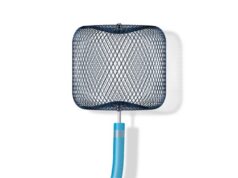
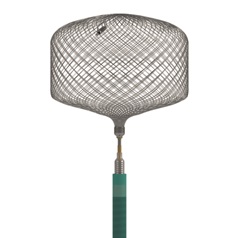
Based on feedback from early Artisse user Michel Piotin (Rothschild Foundation Hospital, Paris, France) and other leading physicians, Medtronic has opted to reimagine the structure of the device and subsequently introduced the new Artisse system, with the key difference compared to prior iterations being its more flared, flatter shape versus the original spheroid design. As a result, the latest Artisse device has a notably reduced height range of 3–5mm compared to its predecessor’s 5.4–10.8mm.
According to Piotin, the flared shape of Artisse enables improved aneurysm neck coverage and wall apposition—particularly in wide-neck aneurysms—and allows the device to fill a greater volume of space when compressed. In addition, a total of 20 different device sizes are now available compared to the 14 variations physicians could choose from with Artisse’s first generation. Piotin noted in his presentation at LINNC Paris 2025 that this has expanded the range of aneurysm types that can be treated using the device.
Having started to use this second-generation intrasaccular system at his centre in 2024, Piotin highlighted take-home messages from 49 aneurysm patients—the majority of whom had side-wall or bifurcation aneurysms—relaying that Artisse has retained its conformability and ease of deployment, and its new flared shape appears to enable better wall apposition too.
INSPIRE-A one-year imaging data
This year’s LINNC Paris Course also saw Monika Killer-Oberpfalzer (Salzburg University Hospital, Salzburg, Austria) present findings from the 293 aneurysm patients who have been treated with Artisse and subsequently analysed to date across Europe within the prospective, non-randomised, observational, multicentre INSPIRE-A registry—a research endeavour intended to collect real-world data on the safety and effectiveness of a number of Medtronic’s aneurysm therapies.
Outlining aneurysm characteristics, Killer-Oberpfalzer noted that 98.3% were previously untreated, 85.2% were bifurcation aneurysms, and 9% were aneurysms that had ruptured within 30 days prior to the study procedure. In addition, while the majority were smaller aneurysms, with 94% being less than 7mm in size, 14.1% were judged to be “complex”, non-spherical aneurysms. In more than 94.3% of 280 patients within the analysis’ modified intention-to-treat (ITT) population, an adjunctive device was not required in addition to Artisse, while a 96.9% rate of device implant success was observed across 290 ITT patients. Speaking to NeuroNews following her presentation, Killer-Oberpfalzer also draws attention to the “astonishing” finding of a cumulative fluoroscopy time that averaged just 24.7 minutes, in addition to efficient device detachment being achieved in 94.6% of cases.
At LINNC Paris 2025, she subsequently disclosed the “really important” outcome of more than 75.8% of patients receiving no postprocedural dual antiplatelet therapy (DAPT), and a further 13.2% being given DAPT for less than 60 days following Artisse implantation. She went on to relay that 76.5% of patients in the analysis also achieved either complete or significant postprocedural stasis, indicating “very good” outcomes immediately after the procedure in most cases. The analysis’ key safety endpoint—major stroke originating in the treated vascular area, or neurological death—occurred in just 1.7% of patients, Killer-Oberpfalzer reported. One death, which was caused by a failed kidney transplantation as opposed to the device or aneurysm procedure itself, was observed.
“Alongside the core lab, we analysed these data, and we found that only the patients who received no antiplatelet therapies ahead of the procedure experienced strokes—not those whose antiplatelet therapy was stopped after the procedure,” she added.
These data show us exactly what we expected—the Artisse device is very safe, and it is very easy to use. This is one of its most important characteristics.
Homing in on the imaging-related, core lab-adjudicated follow-up data available in a total of 148 patients at six months and 50 patients at one year, the presenter relayed a 64.2% rate of six-month complete aneurysm occlusion (Raymond-Roy occlusion classification [RROC], Class I), with 10.8% achieving a residual neck outcome (RROC, Class II). However, she caveated this by stating that—due to insufficient imaging quality—occlusion status could not be determined in 16.2% of cases. The one-year follow-up data revealed similar trends, including a 60% rate of complete occlusion and a 10% rate of residual neck, with the core lab being unable to determine the final occlusion status in 18% of cases. Killer-Oberpfalzer added that excluding these instances ultimately demonstrated an 85.4% rate of adequate occlusion (RROC I/II) and a 73.2% rate of complete occlusion at one year.
Finally, Killer-Oberpfalzer noted that zero aneurysm recurrences have been seen across close to 300 patients, and only two cases (0.7%) have required site-reported retreatment, while analyses of clinical outcomes have indicated an average modified Rankin scale (mRS) score of 0.3 at both six and 12 months, with a 96.6% rate of mRS 0–2 at one-year follow-up.
“We can say that there are high rates of implant success, satisfactory device placement [97.9%] and conformability [98.2%], low rates of device-related adverse events, and high rates of complete occlusion at 12 months,” she concluded.
Killer-Oberpfalzer tells NeuroNews that these longer-term outcomes ultimately “speak for themselves”, describing the analysis’ 60% rate of complete aneurysm occlusion as “fantastic”.
“These data show us exactly what we expected—the Artisse device is very safe, and it is very easy to use,” she continues. “This is one of its most important characteristics. Everybody describes it as easy to use, easy to deploy and easy to navigate.”
Looking to the future, Killer-Oberpfalzer anticipates usage of intrasaccular devices like Artisse growing and expanding into new case types—for example, larger aneurysms—as more sizes become available. She also believes that the “really good” cumulative fluoroscopy times of around 25 minutes and ever-decreasing average procedure times of roughly one hour being observed with Artisse—which have now been demonstrated across hundreds of patients—are likely to be a key driver in this uptake. And, in combination with the device’s ease of use enabling largely “stressless” endovascular aneurysm procedures, these characteristics have led to Artisse becoming Killer-Oberpfalzer’s go-to intrasaccular device for the majority of cases.
Artisse gains NHS England reimbursement
Earlier this year, Medtronic announced that Artisse has been granted reimbursement within the UK National Health Service (NHS) supply chain in England. The device was officially added to NHS England’s Specialised Services Device Programme (SSDP) in the UK and Ireland (UK&I) on 8 April, marking an important milestone in improving access to innovative aneurysm treatments.
“The recent approval for [English] reimbursement of the Artisse intrasaccular technology is a welcome announcement,” said Tufail Patankar (Leeds General Infirmary, Leeds, UK). “It is a positive step forward, promising enhanced access to innovative treatment options. Artisse will make treatment for both elective and acute aneurysms easy, quick and safe, which is important. Although the initial results have been encouraging, it is vital to conduct comprehensive evaluations to verify its long-term effectiveness and safety. Additionally, due to the complexities involved in device sizing, extensive training and robust support are crucial to ensure successful application and optimal patient outcomes.”
Medtronic secured reimbursement approval for Artisse following the publication of six-month follow-up data from the INSPIRE-A registry. The evidence was reviewed by the Device Working Group (DWG), comprising independent clinicians, as part of the SSDP assessment process and supported the case for national funding. Through inclusion in the SSDP, Artisse is now centrally funded by NHS England rather than by individual NHS hospital trusts. This removes a significant financial barrier for hospitals, allowing NHS hospital trusts to access Artisse without impacting local budgets, thus supporting more equitable patient access across England.
“Having used the Artisse device in a range of cases, I’ve been particularly impressed by its responsive navigability and precision during deployment, which enhance both operator control and procedural safety,” commented Han Seng Chew (Queen Elizabeth Hospital, Birmingham, UK). “Its high conformability and atraumatic tip design provide distinct advantages in treating wide-necked bifurcation aneurysms. Artisse represents a valuable and timely addition to the intrasaccular treatment toolkit.”
DISCLAIMER: The data and content included in this article express only the clinical perspectives of the interviewees. They are completely independent and do not necessarily reflect the opinions of Medtronic.