
Expanded eligibility for advanced stroke therapies, and new recommendations on diagnosing and treating stroke in children as well as adults, are among major updates from a new American Stroke Association (ASA) guideline published in the journal Stroke. According to the ASA, this 2026 guideline on the early management of patients with acute ischaemic stroke replaces the 2018 edition and its 2019 update, reflecting “a surge of new evidence” in acute ischaemic stroke care. It provides an evidence-based roadmap for healthcare professionals to recognise, diagnose and treat ischaemic stroke—from prehospital recognition to hospital management and early recovery—the ASA also states.
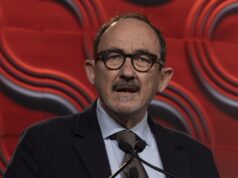
“This update brings the most important advances in stroke care from the last decade directly into practice,” said Shyam Prabhakaran (University of Chicago Medicine, Chicago, USA), chair of the writing group for the guideline. “New recommendations in the guideline expand access to cutting-edge treatments, such as clot-removal procedures and medications, simplify imaging requirements so more hospitals can act quickly, and introduce guidance for paediatric stroke for the first time.”
Since the aforementioned 2019 update, several landmark trials have transformed stroke care—encompassing interventions for large vessel occlusions (LVOs), including clot-busting and clot-removal therapies, and streamlined hospital workflows. The ASA’s 2026 guideline “brings that progress together” to standardise stroke care across hospitals of all sizes and ensure rapid, evidence-based treatment “for every patient, regardless of where they live”.
The updated recommendations reinforce the notion that outcomes depend on what treatments are provided to stroke patients, and how quickly and efficiently they are delivered. They also focus on enhancing stroke care systems, accelerating the use of imaging techniques and medication delivery, and expanding access to advanced procedures like endovascular mechanical thrombectomy.
“Time is brain,” Prabhakaran added. “This new guideline makes that concept real, showing how systems—from EMS [emergency medical services] to hospitals—can work together to cut 30–60 minutes off treatment time to improve patient outcomes and reduce the likelihood of disability.”
First-time guidance on paediatric stroke
Stroke in infants, children and teens is rare but does occur, and prompt recognition is “critical”, according to the ASA. Similarly to adults, children can exhibit the same warning signs described within the FAST acronym—face drooping; arm weakness; speech difficulty; time to call 911. However, stroke warning signs that occur more often in children may also include:
- Sudden severe headache, especially with vomiting and sleepiness
- New onset of seizures, usually on one side of the body
- Sudden confusion, or difficulty speaking or understanding others
- Sudden trouble seeing from one or both eyes
- Sudden difficulty walking, dizziness, or loss of balance or coordination
Currently available stroke screening tools have been developed for adults and therefore have limited capabilities in accurately distinguishing strokes in the paediatric population from ‘mimics’ like migraine, seizure, traumatic brain injury, or brain tumour. As such, the ASA guideline advises rapidly performing magnetic resonance imaging (MRI) and MR angiography (MRA) to identify arterial blockages, differentiating ischaemic from haemorrhagic stroke and ruling out mimics in paediatric patients. Computed tomography (CT) is reasonable if MRI is not available in a timely manner, according to the guideline.
Furthermore, regarding the treatment of ischaemic stroke in children, the guideline states that the intravenous, clot-busting agent alteplase may be considered within 4.5 hours for children aged 28 days to 18 years with disabling deficits, while mechanical clot removal performed by experienced neurointerventionists may be effective for large-vessel blockages in children aged ≥6 years within six hours—and may be reasonable up to 24 hours after symptoms begin if imaging shows salvageable brain tissue.
“These recommendations represent a major step toward standardised, evidence-based care for children,” Prabhakaran commented. “They also highlight how much more we still need to learn about paediatric stroke.”
Timely care and rapid diagnosis
The guideline emphasises the need for coordinated regional systems of care that link 911 call centres, EMS agencies, hospitals and telemedicine networks, as well as the fact that mobile stroke units—ambulances equipped with CT scanners and stroke-trained care teams—demonstrate how faster response times can accelerate recognition and treatment delivery.
It also states that, in regions with reasonable access to thrombectomy-capable stroke centres (TSCs), EMS should transport patients with suspected LVOs to the nearest TSC for immediate evaluation, as direct transportation to these centres can be beneficial for reducing delays in diagnosis and treatment, ultimately helping more patients to receive a thrombectomy when indicated. Additionally, in regions without geographic access to TSCs, the guideline focuses on reducing door-in-door-out times at hospitals transferring patients to TSCs.
Regarding diagnoses, the guideline recommends that hospitals should complete an initial brain scan within 25 minutes of arrival to confirm that symptoms are caused by an ischaemic stroke, rather than a brain bleed, so that the right treatment—clot-dissolving or clot-removal treatments—can begin safely and without delay.
Owing to the fact that advanced brain imaging techniques like MRI or CT perfusion can show how much a stroke has damaged the brain tissue, the new ASA guideline also advises hospitals without advanced perfusion imaging to use the standard Alberta stroke programme early CT score (ASPECTS) system to identify suitable candidates for thrombectomy procedures.
Clot-busting medications and endovascular procedures
The guideline endorses the use of either tenecteplase or alteplase within 4.5 hours of symptom onset, as both intravenous medications are effective in dissolving blood clots. However, as a single-dose infusion, tenecteplase carries the added advantage of simplifying treatment compared to the 60-minute time period required for alteplase infusion.
For some people who wake up with stroke symptoms or arrive at the hospital after the standard 4.5-hour window for treatment, these clot-busting treatments may still be effective up to 24 hours after the onset of stroke symptoms—provided advanced brain imaging shows tissue that has not been irreversibly damaged—the guideline also states.
It goes on to posit that thrombectomy “remains a powerful treatment” for major strokes caused by LVOs in eligible patients, and that patients who are eligible for both clot-busting medications and a thrombectomy should receive both, rapidly and sequentially—without delaying the procedure—to “see if symptoms improve”.
Additionally, the ASA guideline acknowledges that mechanical thrombectomy is now recommended in selected patients for up to 24 hours after symptom onset even if imaging shows certain large-core infarcts measured via ASPECTS, meaning a significant area of brain tissue has been severely damaged due to lack of blood flow.
Based on new evidence, eligibility for thrombectomy now also includes some patients with posterior-circulation strokes as well as certain cases involving mild or moderate preexisting disability within the first six hours after symptom onset. However, according to the guideline, the procedure is not routinely recommended for more distally located blockages in medium or small arteries of the brain—although it may be considered acceptable in the context of a clinical trial.
The updated ASA guideline will be featured in multiple sessions at the upcoming International Stroke Conference (ISC; 4–6 February 2026, New Orleans, USA).