
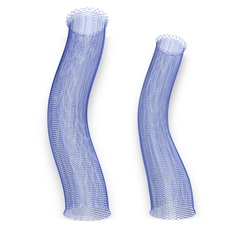
Acandis has announced the start of patient recruitment in the CARESTAR study following final positive approval from the responsible ethics committee.
CARESTAR is a prospective, randomised, multicentre, international post-market clinical follow-up (PMCF) study evaluating the treatment of symptomatic non-stenotic carotid disease (SyNC; <50% stenosis) using the Caresto Heal stent compared to best medical therapy alone.
According to an Acandis press release, the trial addresses a pressing clinical challenge: how to reduce the risk of recurrent embolic events in patients with symptomatic carotid lesions that do not meet the criteria for high-grade stenosis but exhibit features of plaque vulnerability. While current clinical guidelines primarily focus on high-grade carotid stenosis, low-grade SyNC lesions caused by stenoses <50% represent a high-risk population for whom evidence-based treatment options remain limited, the company also claims.
CARESTAR aims to close this evidence gap by generating randomised clinical data to inform optimal patient management. The study is investigating whether early endovascular stabilisation of vulnerable carotid plaques using the Caresto Heal stent can reduce embolic events and improve long-term neurological outcomes compared with medical therapy alone. The device is designed to provide a minimally invasive treatment option for patients whose risk profile is not adequately addressed by current standards of care.
CARESTAR is a parallel-group PMCF study featuring blinded functional assessment of the safety endpoint. Its primary objective is to demonstrate the superiority of carotid stenting over best medical therapy alone in patients with SyNC. Key endpoints include the rate of recurrent ischaemic stroke or retinal artery ischaemia over a follow-up period of one to six years; rate of stroke, death or myocardial infarction (MI) at 30 days assessed as a safety outcome; and generation of the first randomised clinical insights into optimised treatment strategies for carotid disease with <50% stenosis.
This study is being coordinated by an international consortium of leading stroke and neurovascular experts: Hannes Nordmeyer (Städtisches Klinikum Solingen, Solingen, Germany), Götz Thomalla (University Medical Center Hamburg-Eppendorf, Hamburg, Germany), Mayank Goyal (University of Calgary, Calgary, Canada), and Marcel Dihné (Städtisches Klinikum Solingen, Solingen, Germany). According to the coordinating investigators, there is a clear need for robust clinical evidence to guide treatment decisions in SyNC, which CARESTAR is designed to address.
“With the initiation of patient recruitment for CARESTAR, Acandis reinforces its commitment to driving innovation and addressing unmet clinical needs in neurovascular care,” said Andreas Schüßler, the company’s founder and chief executive officer (CEO). “This study represents an important step in evaluating the potential of the Caresto Heal stent in an underserved and clinically challenging patient population with the goal of reducing the risk of recurrent stroke in patients with vulnerable plaques.”