
The findings of EMMA-CAN—the first randomised controlled trial (RCT) in Canada assessing embolisation of the middle meningeal artery (EMMA) as an adjunct to surgical drainage in chronic subdural haematoma (cSDH) patients—have shown the approach to be associated with significant reductions in both radiographic and symptomatic haematoma recurrence as compared to surgery alone.
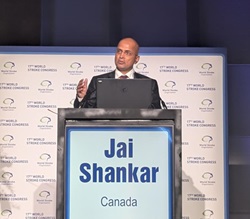
Speaking at this year’s World Stroke Congress (WSC; 22–24 October, Barcelona, Spain), leading investigator Jai Shankar (University of Manitoba, Winnipeg, Canada) acknowledged the fact that EMMA-CAN is the latest in a series of recent RCTs demonstrating EMMA’s potential benefits in these patients. However, he was also keen to emphasise that this trial is the first fully independent, investigator-initiated RCT evaluating cSDH management with EMMA, having been conducted with no industry input.
“We had more stringent inclusion criteria compared to the previously published studies, […] as well as fewer biases and more complete follow-up,” he continued. “This was also the only [EMMA] study where surgeons were blinded in terms of which group the patients were randomised to, giving us a more objective primary outcome.”
EMMA-CAN was a prospective, open-label, blinded-endpoint RCT examining the safety and efficacy of EMMA adjunctive to the current standard of care in patients with symptomatic, unilateral cSDH. Its primary endpoint was the centrally adjudicated haematoma recurrence—either radiographic (on computed tomography [CT] imaging) or symptomatic—at 90 days, while serious adverse events and mortality related to the EMMA procedure constituted its key safety endpoints.
A total of 192 patients were enrolled and, following surgical haematoma drainage, subsequently randomised 1:1 to standard care alongside EMMA (intervention) or without EMMA (controls). Ninety-three patients in each of these groups were ultimately included in the study’s intention-to-treat (ITT) analysis. Within the intervention group, patients were treated <72 hours after surgery using the Onyx-18 (Medtronic) liquid embolic agent under general anaesthesia.
Relaying EMMA-CAN’s primary endpoint findings at WSC 2025, Shankar reported a radiographic recurrence rate of 14% in the intervention group compared to 49.5% in the control group (odds ratio [OR], 0.17; p<0.001), in addition to respective symptomatic recurrence rates of 4.3% versus 28% between the two groups (OR, 0.12; p<0.001). As such, the study’s ITT analysis revealed a 3.5-fold reduction in radiographic recurrence and a 6.5-fold reduction in symptomatic recurrence with EMMA plus standard care versus standard care alone.
Additionally, 90-day rates of serious adverse events were statistically comparable between groups, at 8.6% with EMMA and 5.4% without, while the occurrence of death from any cause at 90 days was similar in the intervention group (4.3%) versus the control group (1.1%) too. The presenter also noted that none of the serious adverse events or deaths in the trial were attributed to the EMMA procedure itself.
“What we need now is the longer-term follow-up,” Shankar concluded. “All these patients are being followed up to one year, if they survive. We also need real-world cases. Does [EMMA] really work the same way in those real-world patients who are not eligible for randomised controlled trials? We have done this study already, and the third registry arm will likely be presented next year at the International Stroke Conference [ISC; 4–6 February, New Orleans, USA].”