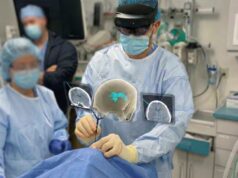
 Intravent Medical Partners has announced the publication of a peer-reviewed study in Neurosurgery evaluating the accuracy of external ventricular drain (EVD) placement using its ultrasound-guided neuronavigation platform, Solopass 2.0.
The study, titled ‘Evaluation of a novel, bedside, ultrasonographic neuronavigation system versus free-hand ventricular targeting: a double-blinded, prospective, paired comparison study’, showed that the Solopass 2.0 system delivered substantial improvements in placement accuracy and potential safety compared with traditional freehand techniques, as detailed in an Intravent press release.
In this repeated-measures experiment, 25 participants ranging from first-year medical students to attending neurosurgeons performed simulated EVD placements using both conventional freehand techniques and Solopass 2.0 ultrasound-guided neuronavigation techniques on anatomically realistic, life-sized cranial models.
According to Intravent, 98% of placements using Solopass 2.0 entered the ventricular system versus only 10% of freehand placements. Additionally, 86% of placements using Solopass 2.0 accurately reached the ipsilateral frontal horn target compared to just 8% with freehand techniques—and the mean miss margin was less than 0.5mm using Solopass 2.0, contrasting with nearly 8mm using freehand guidance.
The company’s recent release states that, ultimately, Solopass 2.0 “consistently delivered superior first-pass accuracy across all levels of neurosurgical experience, demonstrating consistent performance regardless of operator skill”.
“These findings highlight the transformative potential of ultrasound-guided neuronavigation for safer, more precise ventricular access,” said Kevin Foley, Intravent’s chief innovation officer. “Solopass 2.0 empowers clinicians at every experience level to achieve accurate ventricular placement by delivering real-time imaging on an intuitive, easy-to-use platform—an essential advancement for neurosurgical and critical care patients alike.”
“In modern medicine, quality and safety are paramount,” commented Adam Arthur, the company’s chief clinical strategy officer. “The study reinforces our commitment to advancing real-time image guidance and precision in neurosurgery. By integrating portable ultrasound into bedside ventricular procedures, Intravent aims to reduce complications, improve outcomes and expand the accessibility of high-precision care across the spectrum of clinical settings.”