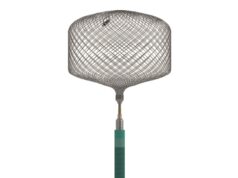
 Arissa Medical has announced positive six-month digital subtraction angiography (DSA) results from its prospective, single-arm, 16-patient pilot study evaluating the Syntra intrasaccular device—an intra-aneurysmal solution designed for the treatment of complex wide-neck intracranial aneurysms with acute angulation.
“These six-month results are highly encouraging given the complexity of the anatomies treated, where, in many of the complex aneurysms, standard adjunctive coils experienced microcatheter tip deflection/prolapse due to extreme angulated aneurysm access,” said study principal investigator Juan Gabriel Sordo (Instituto de Neurocirugía Alfonso Asenjo Hospital, Santiago, Chile). “An intrasaccular approach that avoids a permanent parent vessel implant and does not require dual antiplatelet therapy [DAPT] could represent a meaningful shift in the treatment paradigm for wide-neck aneurysms.”
As stated in a recent press release from Arissa, wide-neck aneurysms with challenging vessel geometry are often difficult to treat via conventional coiling alone, and frequently require adjunctive support using stent-assisted coiling (SAC), balloon-assisted coiling (BAC) or flow diversion approaches that may necessitate postprocedural DAPT and permanent parent vessel implants. The Syntra device has been designed as a “fully intrasaccular solution” that may serve to eliminate these requirements.
In the present pilot study, DSA imaging was obtained for all 16 enrolled patients at six-month follow-up, and all angiographic outcomes were independently adjudicated by a University of California Los Angeles (UCLA; Los Angeles, USA)-affiliated medical monitor with blinded core laboratory review.
Key findings at the six-month timepoint include a technical success rate of 100%, as per the study’s primary endpoint, as well as an adequate occlusion (Raymond-Roy class I–II) rate of 93.75% and a 0% retreatment rate. Additionally, device- and procedure-related serious adverse events (SAEs) both occurred at a rate of 0%, as did device migration. The study investigators have also reported no evidence of parent vessel stenosis, thrombosis or compromise on follow-up imaging, and all enrolled patients are said to be in “good health” and in a stable condition based on six- and 12-month follow-up findings to date.
The majority of aneurysms treated in this study demonstrated complex morphology ranging from sizes around 5–14mm, and included wide-neck sidewall and bifurcation aneurysms—with neck sizes ≥4mm or dome-to-neck ratios <2—as well as irregular and tortuous anatomies, and acute angulations relative to the parent vessel. According to Arissa, these aneurysms were considered suboptimal candidates for conventional primary coiling without adjunctive support or parent vessel implant strategies requiring DAPT.
“These early clinical data validate our intrasaccular platform strategy,” said Arissa chief executive officer (CEO) Byung Ju. “We believe Syntra has the potential to simplify procedures, expand treatment eligibility, and improve safety for patients with complex intracranial aneurysms, especially in complex aneurysm locations that current intrasaccular devices may not be able to address safely without resorting to parent vessel solutions that require DAPT.”
Arissa’s release notes that the Syntra intrasaccular device is currently limited to investigational use only. In the release, the company also acknowledges the contributions of its medical and scientific advisors including Gary Duckwiler (UCLA, Los Angeles, USA) and Luis Augusto Lemme-Plaghos (Centro Endovascular Neurológico, Buenos Aires, Argentina).