Two randomised trials presented this week at the European Stroke Organisation Conference (ESOC; 6–8 May 2026, Maastricht, Netherlands) have generated new evidence on the potential benefits of delivering intra-arterial cooling during mechanical thrombectomy procedures in large vessel occlusion (LVO) acute ischaemic stroke patients, with one producing clinical data favouring this approach and the other demonstrating safety but suggesting more neutral efficacy findings.
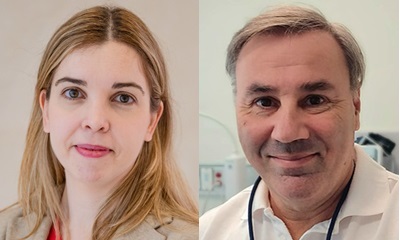
“CHILL-ART and FOCUS suggest that intra-arterial cooling remains a promising neuroprotective adjunct to thrombectomy,” ESO guideline board co-chair Diana Aguiar de Sousa (University of Lisbon, Lisbon, Portugal) told NeuroNews. “While CHILL-ART provides an encouraging efficacy signal, FOCUS is more reassuring on safety than on functional benefit. Taken together, these studies support further investigation—ideally through larger, standardised, preferably international trials designed to clarify protocol, patient selection and the consistency of the treatment effect.”
“The divergent results of the CHILL-ART and FOCUS trials present a classic dilemma: weighing conflicting data from similar protocols before publication,” added World Stroke Organization (WSO) vice president Gustavo Saposnik (University of Toronto, Toronto, Canada), also speaking with NeuroNews in light of these first-time presentations. “While CHILL-ART suggests a robust functional benefit, FOCUS tempers this optimism, showing no functional gain despite a safety signal in reduced intracranial haemorrhage [ICH].
“This inconsistency highlights the uncertainty inherent to neurovascular research, echoing the turbulent history of [mechanical thrombectomy] prior to the 2015 pivotal trials. We must await full publication to parse technical or population differences. Currently, selective intra-arterial hypothermia remains a promise, not a proven standard. These results are hypothesis-generating; more definitive, large-scale data are required before routine integration into thrombectomy workflows.”
Positive efficacy data
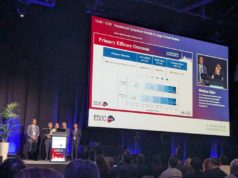
CHILL-ART—the first of these multicentre randomised controlled trials (RCTs) to be shared during a late-breaking session at ESOC 2026—demonstrated that delivering targeted brain cooling during thrombectomy significantly improves recovery outcomes, as a meaningful increase in 90-day functional independence was observed in patients receiving adjunctive intra-arterial selective hypothermia versus those receiving standard thrombectomy alone.
The CHILL-ART RCT enrolled 262 anterior-circulation LVO patients across 26 comprehensive stroke centres in China. Participants aged 18–85 years and treated within 24 hours of stroke onset were randomly assigned to receive either thrombectomy plus intra-arterial infusion of cold saline in the hypothermia group, or thrombectomy with room-temperature saline in the control group.
The trial’s primary endpoint of functional independence (modified Rankin scale [mRS] score 0–2) at 90 days was achieved in 54.7% of patients in the hypothermia group compared to 39.8% in the control group, with an adjusted risk ratio of 1.36 (95% confidence interval [CI], 1.05–1.76; p=0.018). Investigators reported at ESOC 2026 that this equated to a number needed to treat (NNT) of seven. And, “importantly”, in the researchers’ view, safety outcomes were comparable between the hypothermia and control groups, with no significant increase in symptomatic ICH (7% vs 9%, respectively) nor 90-day mortality (13.3% vs 18%, respectively).
Subsequent sensitivity analyses also replicated these findings, indicating the robustness of the trial’s results, and outcomes were shown to be consistent across all study subgroups as well.
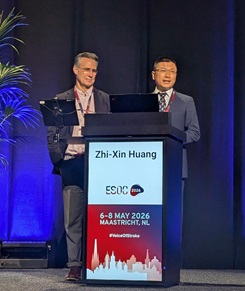
“Even when we successfully remove the clot, many patients do not regain independence because of ongoing brain injury after blood flow is restored,” said CHILL-ART principal investigator Zhi-Xin Huang (Southern Medical University, Guangzhou, China), who presented these data alongside Raul Nogueira (University of Pittsburgh Medical Center, Pittsburgh, USA). “Our findings show that targeted cooling delivered directly into the brain at the moment of reperfusion can meaningfully improve recovery without adding risk.”
According to the investigators, the intervention evaluated in this trial uses standard thrombectomy equipment and refrigerated saline, making it readily scalable in routine clinical practice without requiring specialised devices or additional training.
The researchers also note that, more broadly, CHILL-ART addresses a “critical unmet need” in stroke care: improving outcomes after technically successful clot removal.
By combining reperfusion with targeted neuroprotection, the study introduces a “promising new paradigm” in acute stroke treatment, and its findings may inform future clinical guidelines and support broader adoption of intra-arterial hypothermia as an accessible, cost-effective strategy to reduce disability after stroke, the investigators further posit.
Safe yet neutral outcomes
The FOCUS trial—also investigating selective intra-arterial cooling as an adjunct to thrombectomy for LVO acute ischaemic stroke, and also presented at ESOC 2026—found that, while the cooling technique did not improve functional recovery, it did significantly reduce the risk of any ICH. According to the study’s investigators, these findings therefore provide important insights into the potential role of targeted brain cooling in stroke treatment.
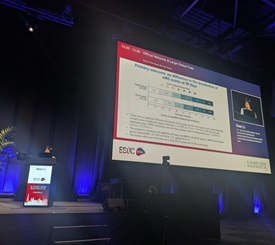
FOCUS was an RCT conducted across 12 hospitals in China that enrolled 258 patients with anterior-circulation LVO stroke who presented within 24 hours of symptom onset. Patients were randomly assigned to receive either selective intra-arterial cooling plus thrombectomy or standard thrombectomy treatment alone.
The trial’s results showed no significant difference in functional outcomes at 90 days between the two groups, with an adjusted common odds ratio of 1.16 (95% CI, 0.75–1.79; p=0.51). However, the cooling technique demonstrated notable safety benefits, reducing the incidence of any ICH at 24 hours compared to standard treatment (adjusted risk difference, -0.174; 95% CI, -0.288 to -0.059; p=0.003). Additionally, there was no difference in the occurrence of symptomatic ICH or mortality between groups.
The FOCUS investigators note that, while hypothermia has long been studied as a potential neuroprotective therapy for stroke based on its ability to reduce brain metabolism and limit secondary injury, its potential benefits require further study at this stage.
“These findings validate the feasibility of selective intra-arterial cooling as an adjunctive therapy during endovascular thrombectomy,” commented leading study author Shen Li (Capital Medical University, Beijing, China), who presented these data at ESOC 2026. “The marked decrease in any ICH indicates a potential protective effect on the blood-brain barrier and microvasculature, which may translate into clinical benefits. Although we did not observe a functional improvement in this trial, it paves the way for future studies with larger sample sizes or refined patient selection to fully unlock the neuroprotective potential of hypothermia.”