Kandu has announced results from what it describes as the first randomised controlled trial (RCT) evaluating a US Food and Drug Administration (FDA)-cleared, non-invasive brain-computer interface (BCI) therapy in chronic stroke survivors. The findings—presented at the International Stroke Conference (ISC; 4–6 February 2026, New Orleans, USA)—showed that patients using the IpsiHand system achieved significantly greater improvements in upper-extremity motor function than those participating in a home exercise programme, with a number needed to treat (NNT) of 2.2 for a single patient to achieve a clinically meaningful functional benefit.
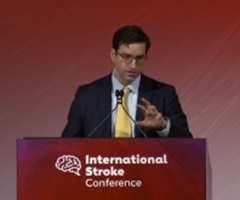
The results were presented by study principal investigator Eric Leuthardt (Washington University School of Medicine, St Louis, USA), who is the co-founder and chief scientific officer of Neurolutions—the original developer of the IpsiHand system that merged with Kandu last year. IpsiHand gained US FDA 510(k) clearance as a breakthrough-designated device for stroke rehabilitation in 2021.
Via a late-breaking oral abstract on the final day of ISC 2026, Leuthardt shared detailed outcomes from a post-market RCT evaluating the clinical performance of at-home, BCI-enabled therapy with IpsiHand compared to standard exercise therapy for chronic upper-extremity motor deficit after stroke.
“These data fundamentally challenge the longstanding belief that recovery after stroke permanently plateaus after the first few months,” said Kandu chief executive officer (CEO) Leo Petrossian. “For decades, patients living with chronic stroke have been told that what they regain early on is all they can expect. This randomised trial shows that—with the right technology, delivered at home, without the burden of frequent clinic visits—meaningful recovery is still possible years after stroke.”
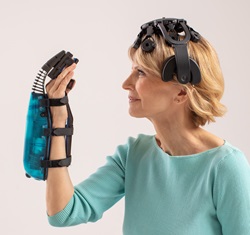
In the study, patients were directed to complete their assigned therapy five times per week over a 12-week period. Participants were at least six months post-stroke with persistent upper-extremity hemiparesis or hemiplegia, and with no upper or lower limits on baseline upper-extremity Fugl-Meyer (UEFM) scores. The study enrolment was stopped early for efficacy following a planned interim analysis. A total of 62 participants with a mean time since stroke of 5.4 years were included in the primary analysis, 37 of whom received BCI therapy and 25 of whom were allocated to standard exercise therapy.
Patients treated with BCI therapy showed a mean improvement of six points on the UEFM scale compared to an improvement of 1.5 points in the control group, representing a 4.5-point treatment advantage (95% confidence interval [CI], 1.9–7.1; p=0.0007). The average improvement in the BCI group exceeded the minimal clinically important difference (MCID) of 5.25, indicating functional gains considered meaningful to patients, as detailed in a recent press release from Kandu. More than half of the patients receiving BCI therapy (55.5%) achieved a clinically meaningful response, compared to 9.6% of patients in the control group—an absolute difference of 45.8 percentage points (95% CI, 10.9–70.8; p=0.0003).
Kandu’s recent release notes that, while stroke often disrupts contralateral motor pathways, ipsilateral motor intent signals from the unaffected hemisphere of the brain may persist.
“This randomised trial shows that engaging preserved ipsilateral neural signals through a non-invasive brain-computer interface can drive meaningful motor recovery in chronic stroke,” Leuthardt commented.
“IpsiHand is commercially available as prescribed durable medical equipment and used independently by patients, multiple times a week, in their own homes,” Petrossian added. “That matters. It removes barriers to access, reduces dependence on in-clinic therapy, and allows recovery to fit into patients’ lives instead of the other way around. While this study evaluated outcomes over the first 12 weeks of therapy, recently published real-world evidence demonstrates that continued use may support ongoing improvement over longer periods. Taken together, these findings support a new, more durable approach to chronic stroke recovery—one that physicians can prescribe today.”